 Abba Ho Pater
Articles
#هل نعبد اله واحد
Fady Mondy's articles on هل نعبد اله واحد — 8 posts.
The witnesses
7 of 7 axes witnessed- Holy Scripture1
- Apostolic Fathers1
- Apologist Fathers1
- Contemporary Writers1
- Liturgy & Hymns2
- Definition1
- Church History1
Holy Scripture
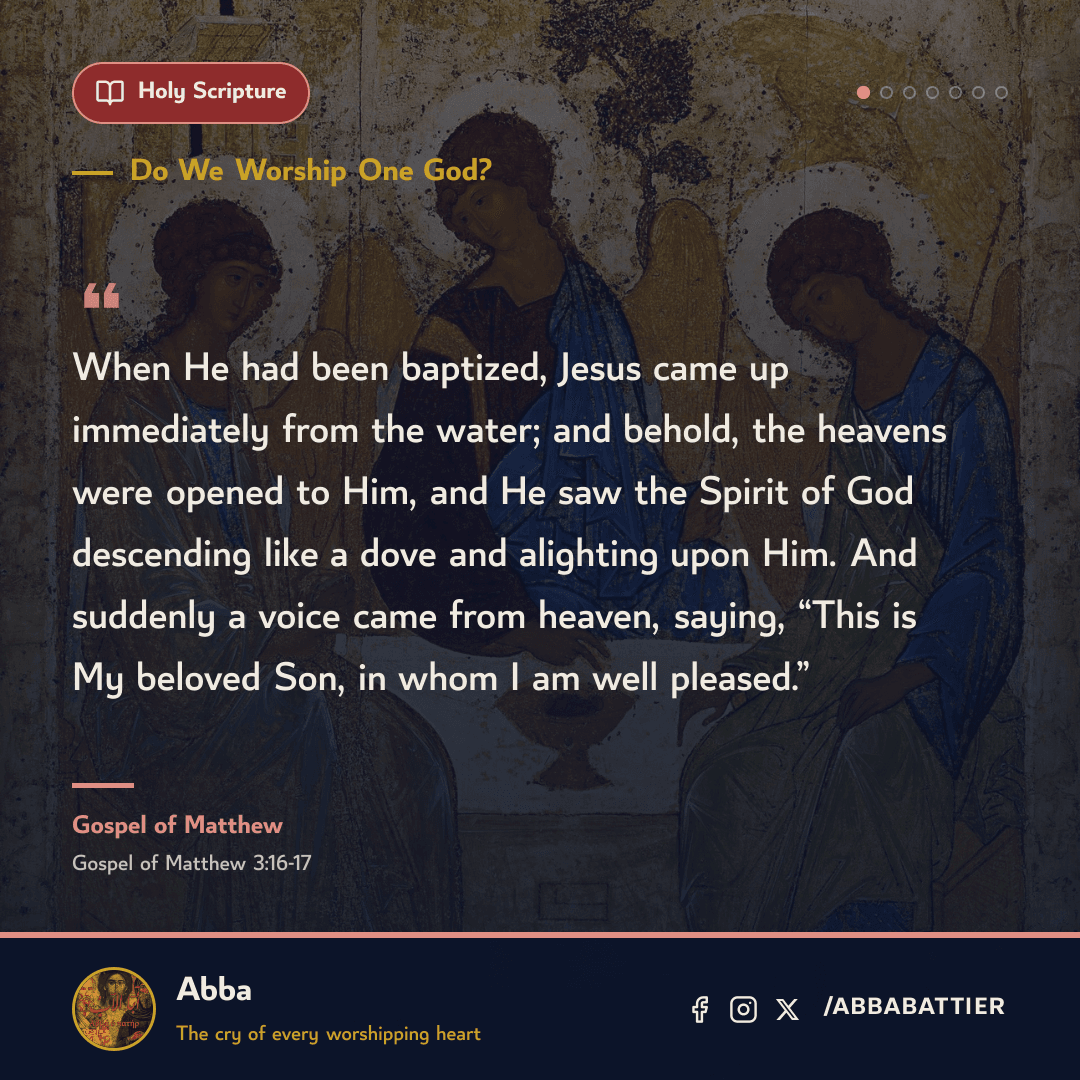
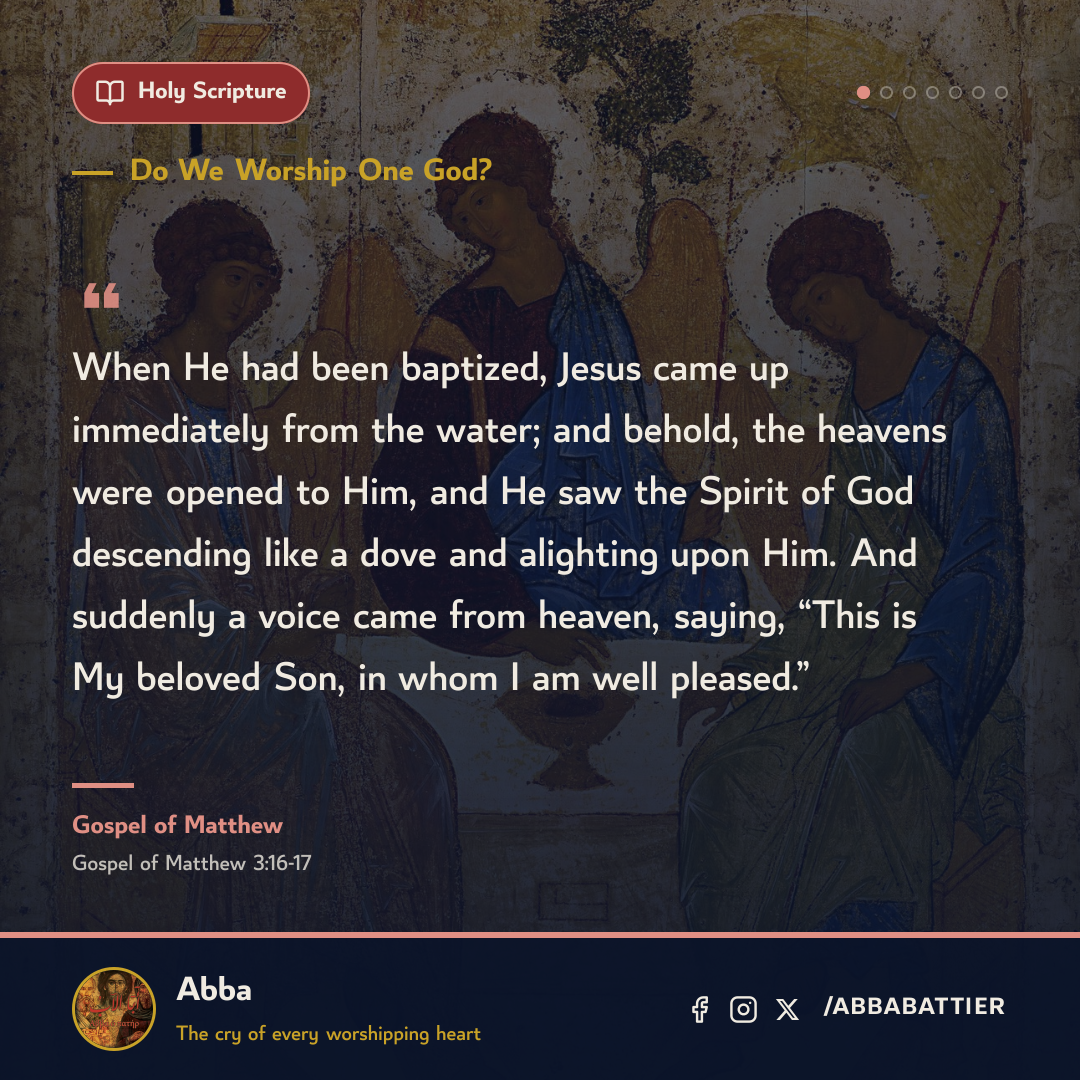
When He had been baptized, Jesus came up immediately from the water; and behold, the heavens were opened to Him, and He saw the Spirit of God descending like a dove and alighting upon Him. And suddenly a voice came from heaven, saying, “This is My beloved Son, in whom I am well pleased.”
— Gospel of Matthew, Gospel of Matthew, 3:16-17
Apostolic Fathers
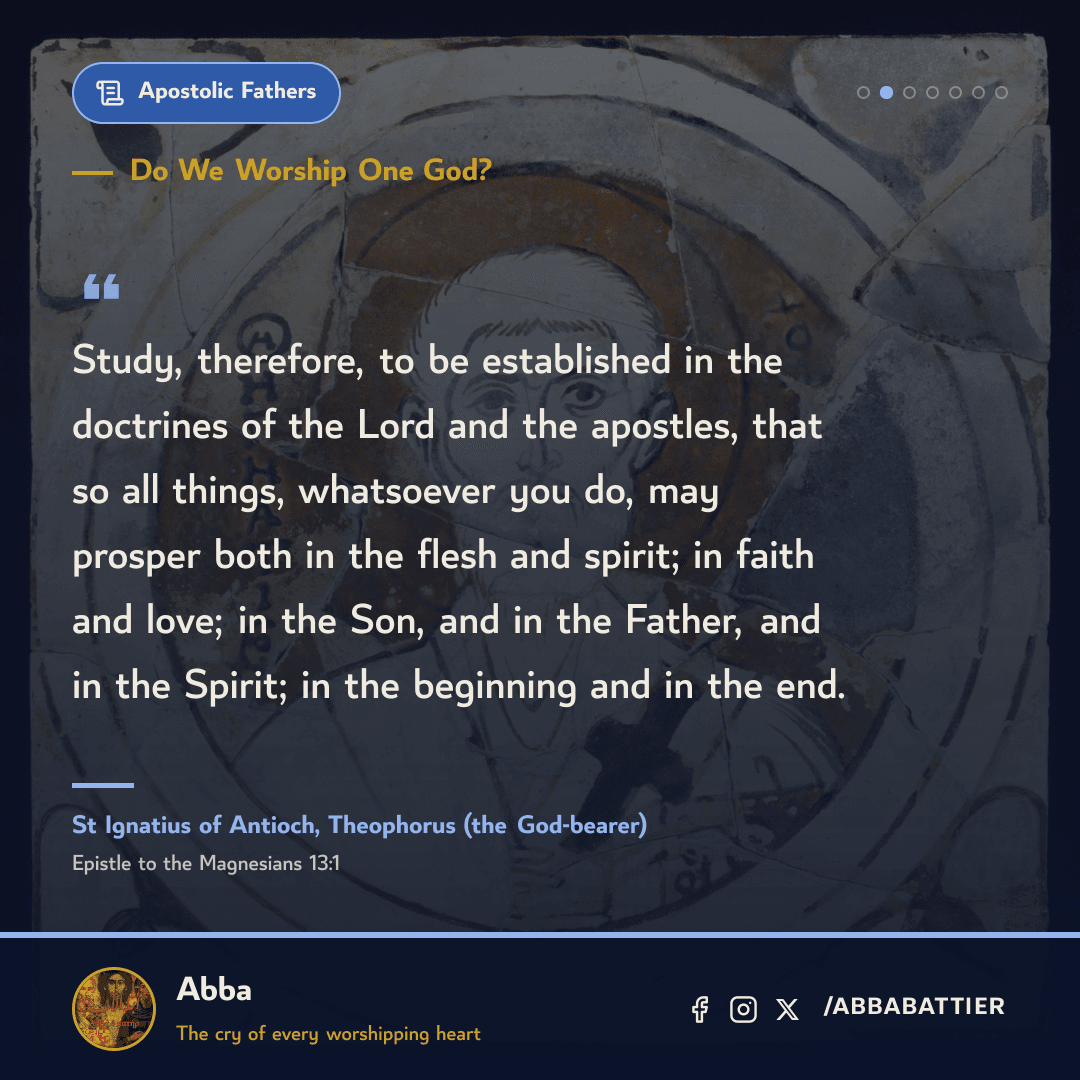
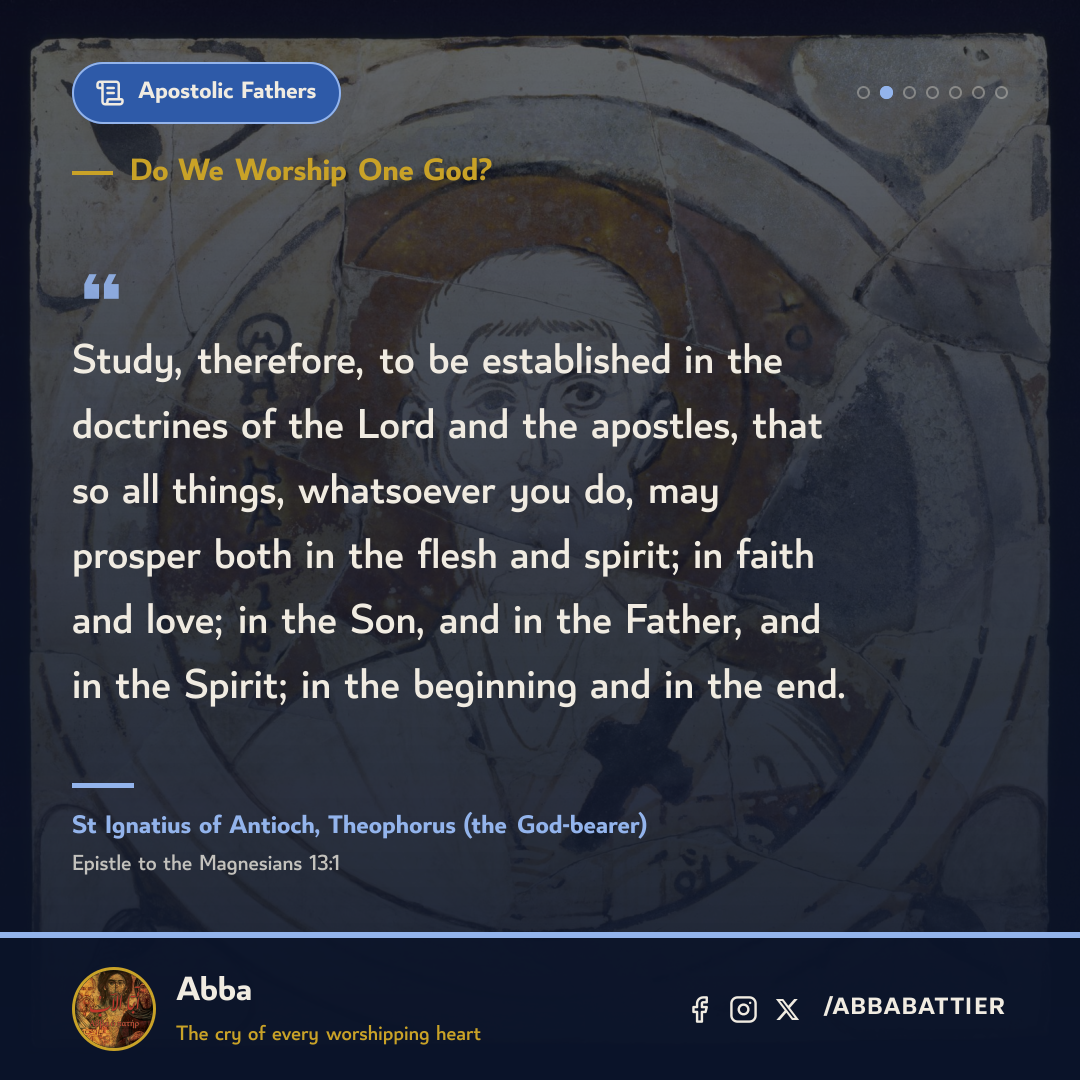
Study, therefore, to be established in the doctrines of the Lord and the apostles, that so all things, whatsoever you do, may prosper both in the flesh and spirit; in faith and love; in the Son, and in the Father, and in the Spirit; in the beginning and in the end.
— St Ignatius of Antioch, Theophorus (the God-bearer), Epistle to the Magnesians, 13:1 source
Apologist Fathers
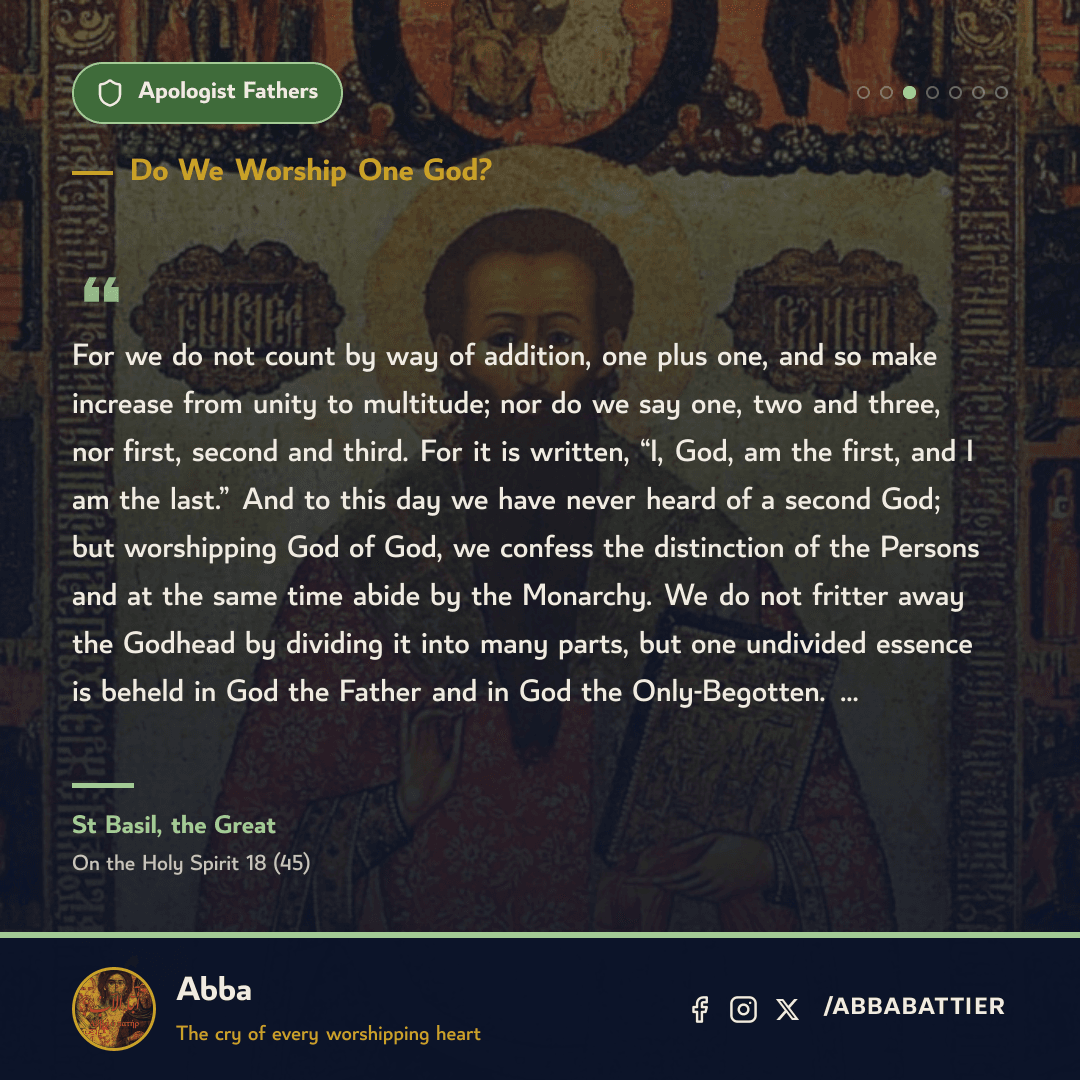
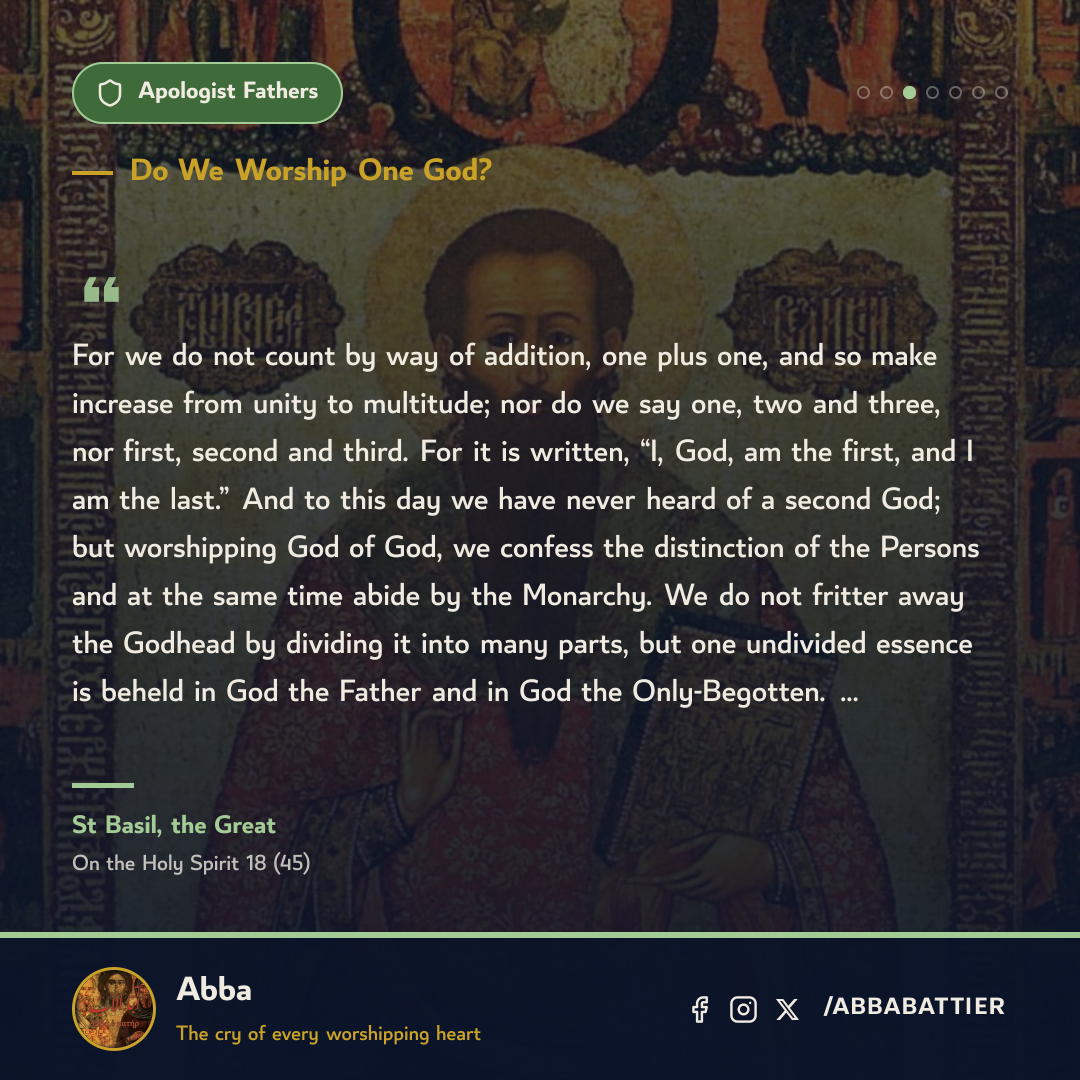
For we do not count by way of addition, one plus one, and so make increase from unity to multitude; nor do we say one, two and three, nor first, second and third. For it is written, “I, God, am the first, and I am the last.” And to this day we have never heard of a second God; but worshipping God of God, we confess the distinction of the Persons and at the same time abide by the Monarchy. We do not fritter away the Godhead by dividing it into many parts, but one undivided essence is beheld in God the Father and in God the Only-Begotten. …
— St Basil, the Great, On the Holy Spirit, 18 (45) source
Contemporary Writers
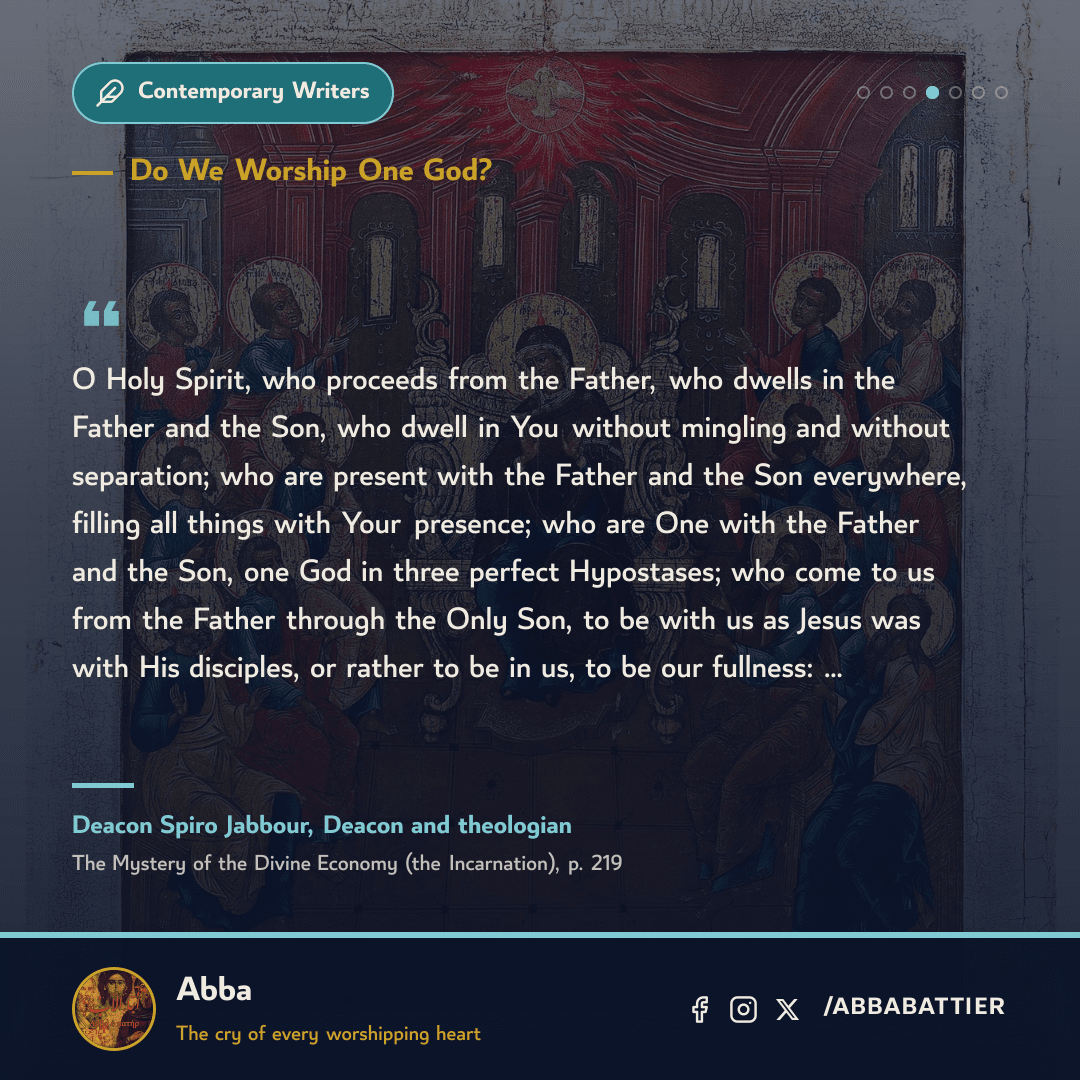
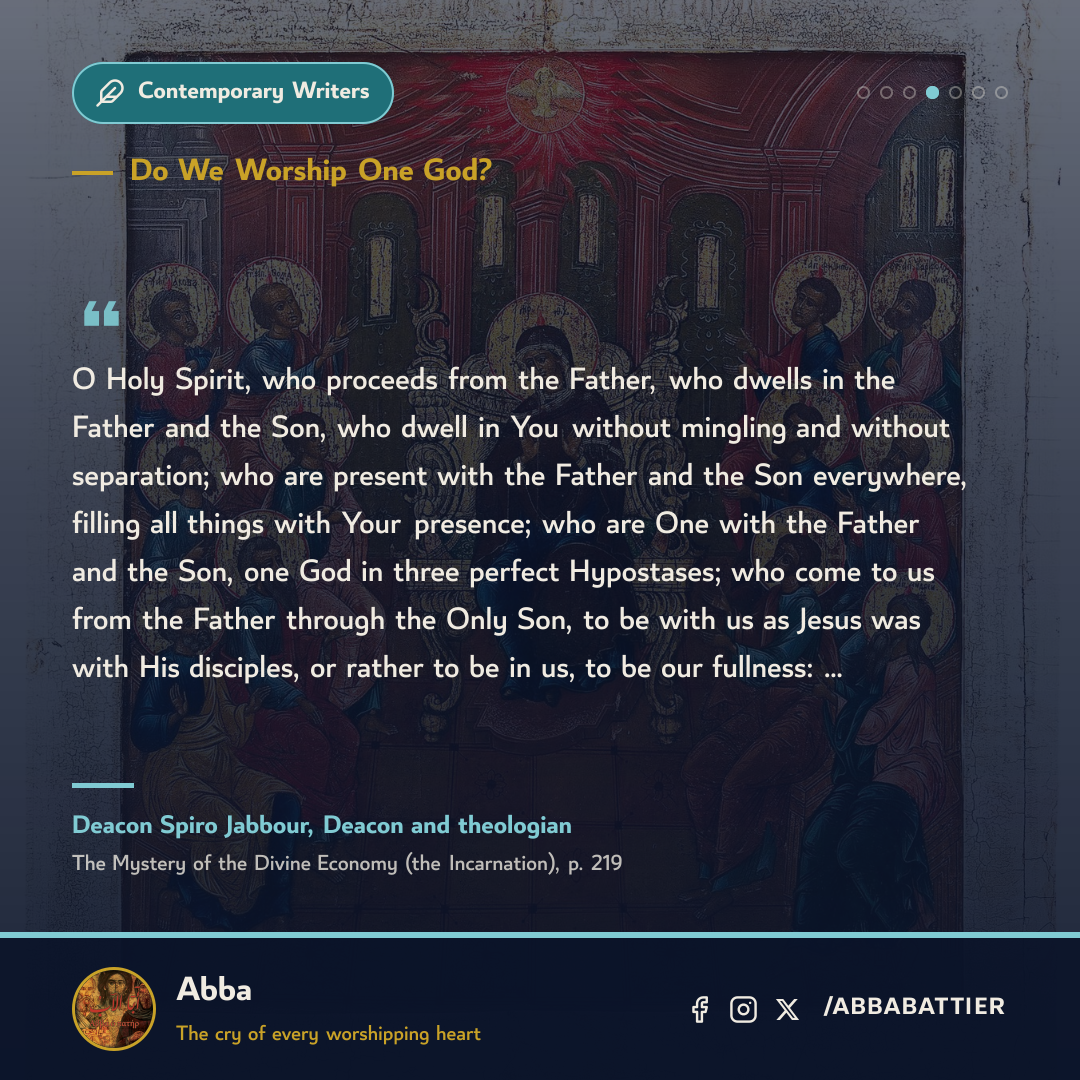
O Holy Spirit, who proceeds from the Father, who dwells in the Father and the Son, who dwell in You without mingling and without separation; who are present with the Father and the Son everywhere, filling all things with Your presence; who are One with the Father and the Son, one God in three perfect Hypostases; who come to us from the Father through the Only Son, to be with us as Jesus was with His disciples, or rather to be in us, to be our fullness: …
— Deacon Spiro Jabbour, Deacon and theologian, The Mystery of the Divine Economy (the Incarnation), p. 219
Liturgy & Hymns
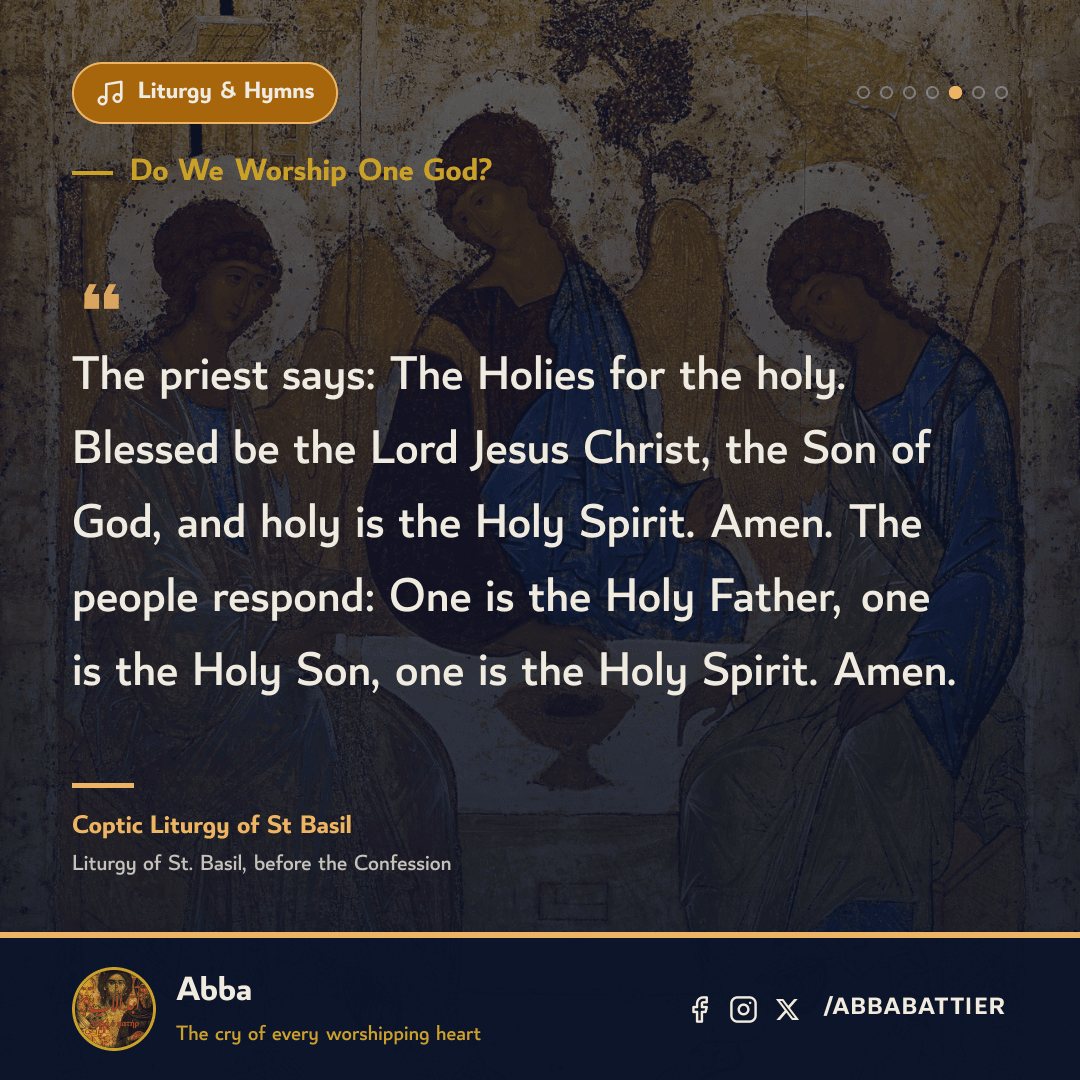
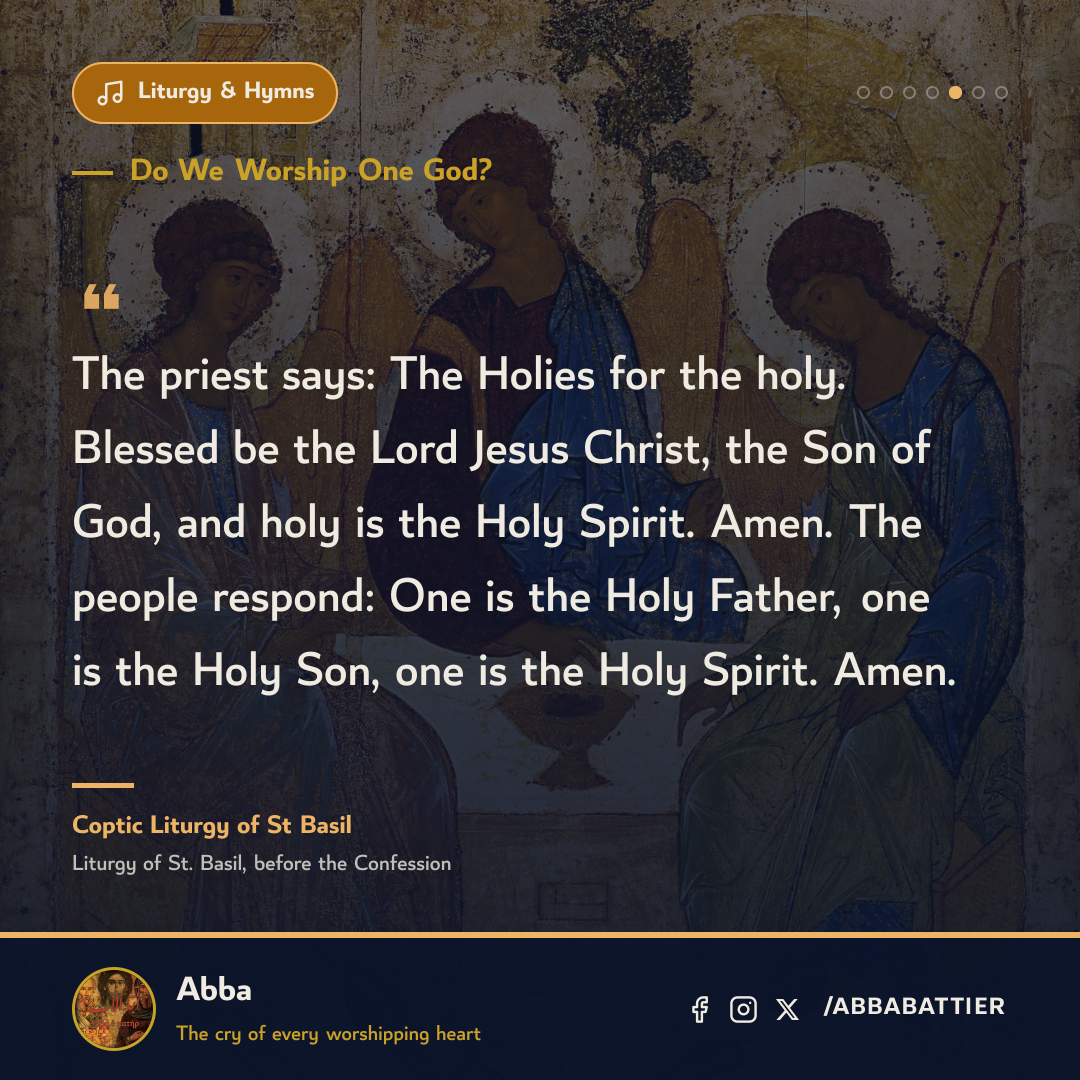
The priest says: The Holies for the holy. Blessed be the Lord Jesus Christ, the Son of God, and holy is the Holy Spirit. Amen. The people respond: One is the Holy Father, one is the Holy Son, one is the Holy Spirit. Amen.
— Coptic Liturgy of St Basil, Liturgy of St. Basil, before the Confession
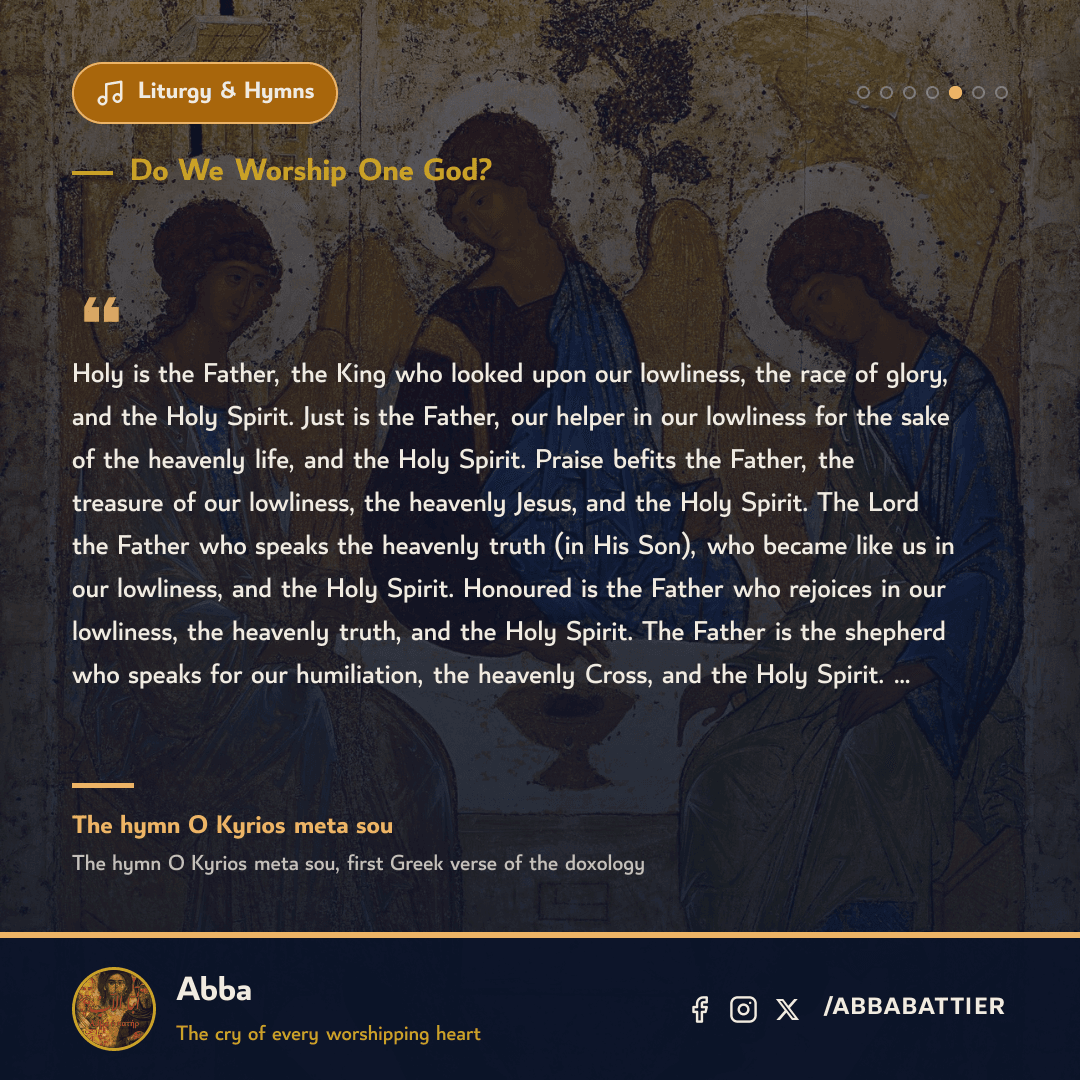
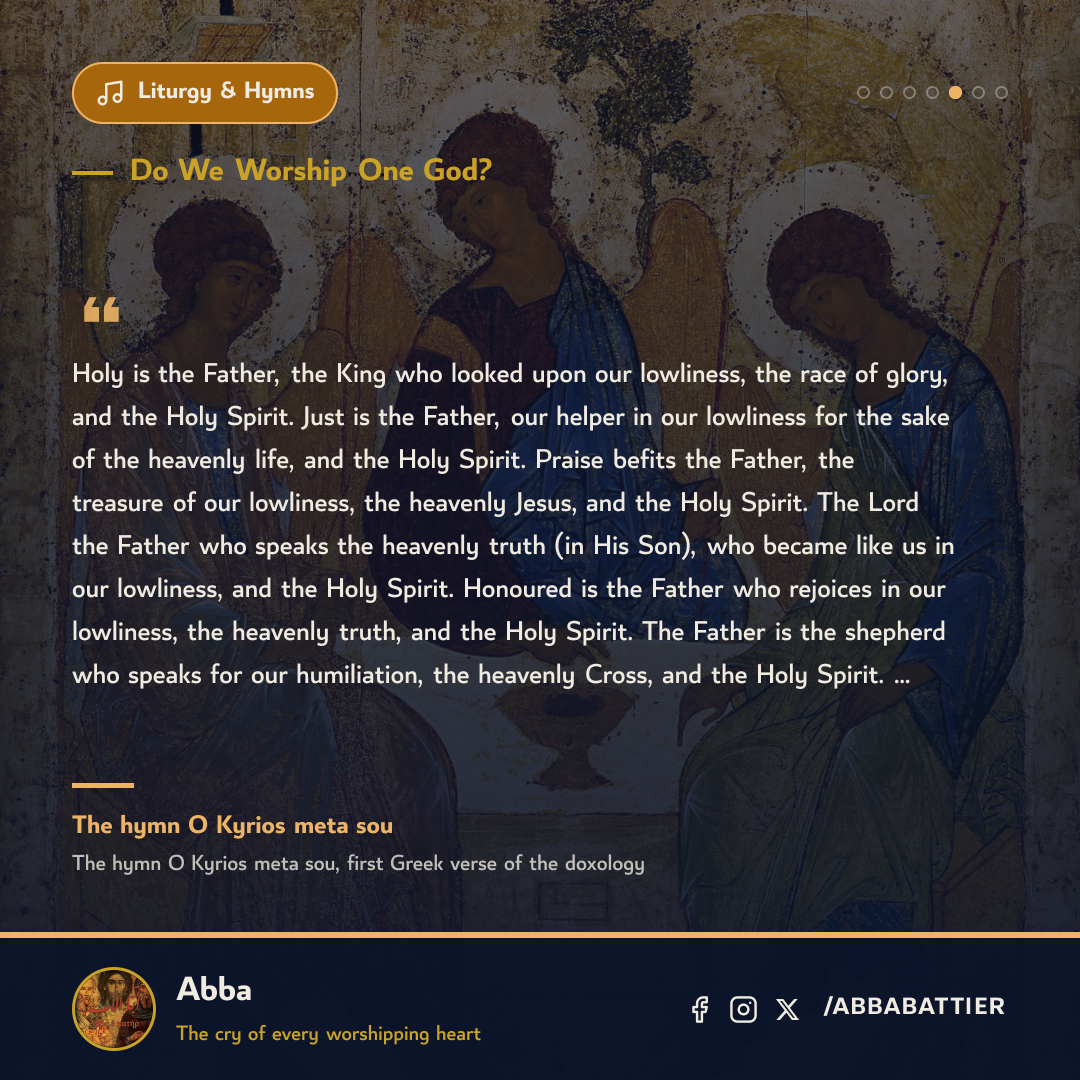
Holy is the Father, the King who looked upon our lowliness, the race of glory, and the Holy Spirit. Just is the Father, our helper in our lowliness for the sake of the heavenly life, and the Holy Spirit. Praise befits the Father, the treasure of our lowliness, the heavenly Jesus, and the Holy Spirit. The Lord the Father who speaks the heavenly truth (in His Son), who became like us in our lowliness, and the Holy Spirit. Honoured is the Father who rejoices in our lowliness, the heavenly truth, and the Holy Spirit. The Father is the shepherd who speaks for our humiliation, the heavenly Cross, and the Holy Spirit. …
— The hymn O Kyrios meta sou, The hymn O Kyrios meta sou, first Greek verse of the doxology
Definition
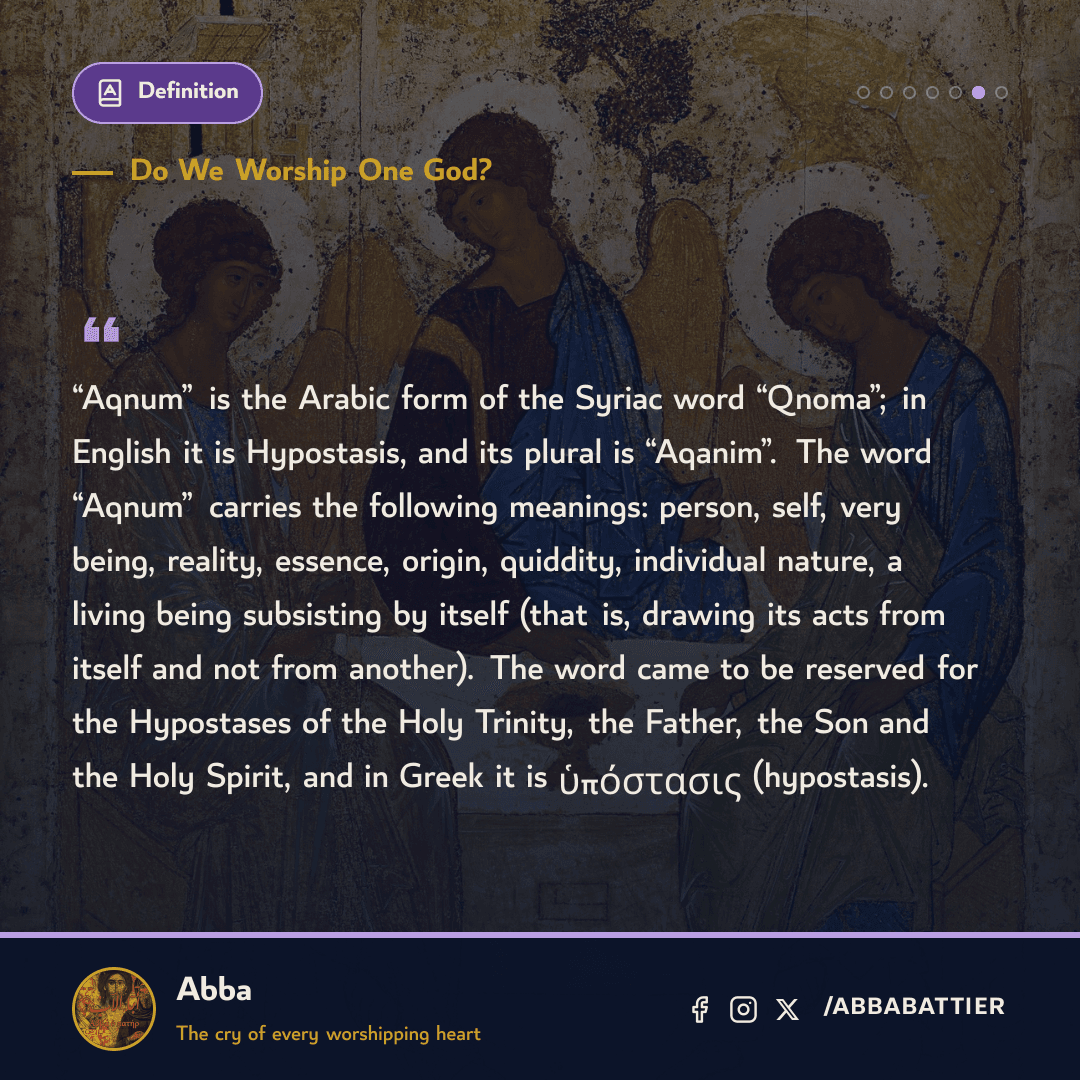
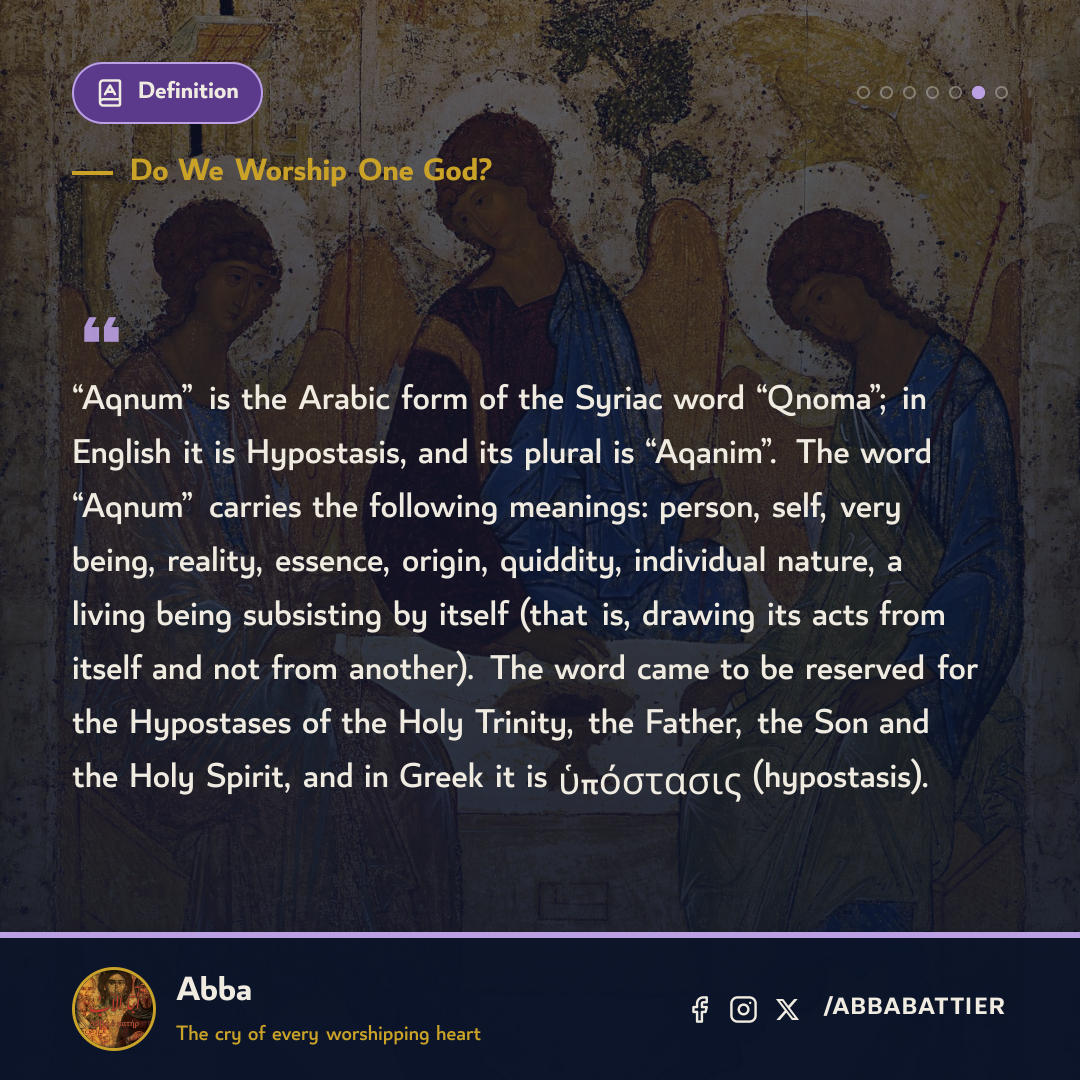
“Aqnum” is the Arabic form of the Syriac word “Qnoma”; in English it is Hypostasis, and its plural is “Aqanim”. The word “Aqnum” carries the following meanings: person, self, very being, reality, essence, origin, quiddity, individual nature, a living being subsisting by itself (that is, drawing its acts from itself and not from another). The word came to be reserved for the Hypostases of the Holy Trinity, the Father, the Son and the Holy Spirit, and in Greek it is ὑπόστασις (hypostasis).
—
Church History
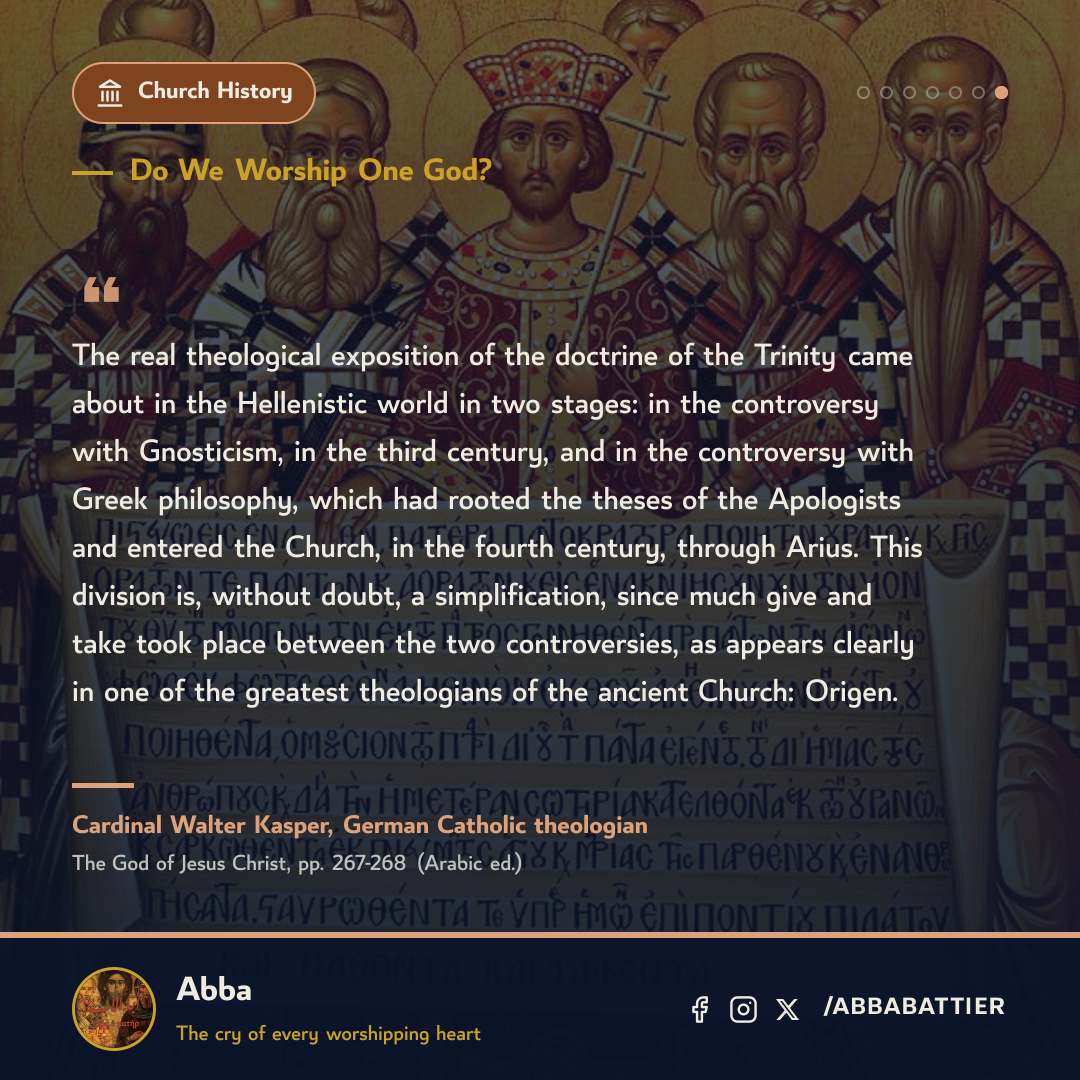
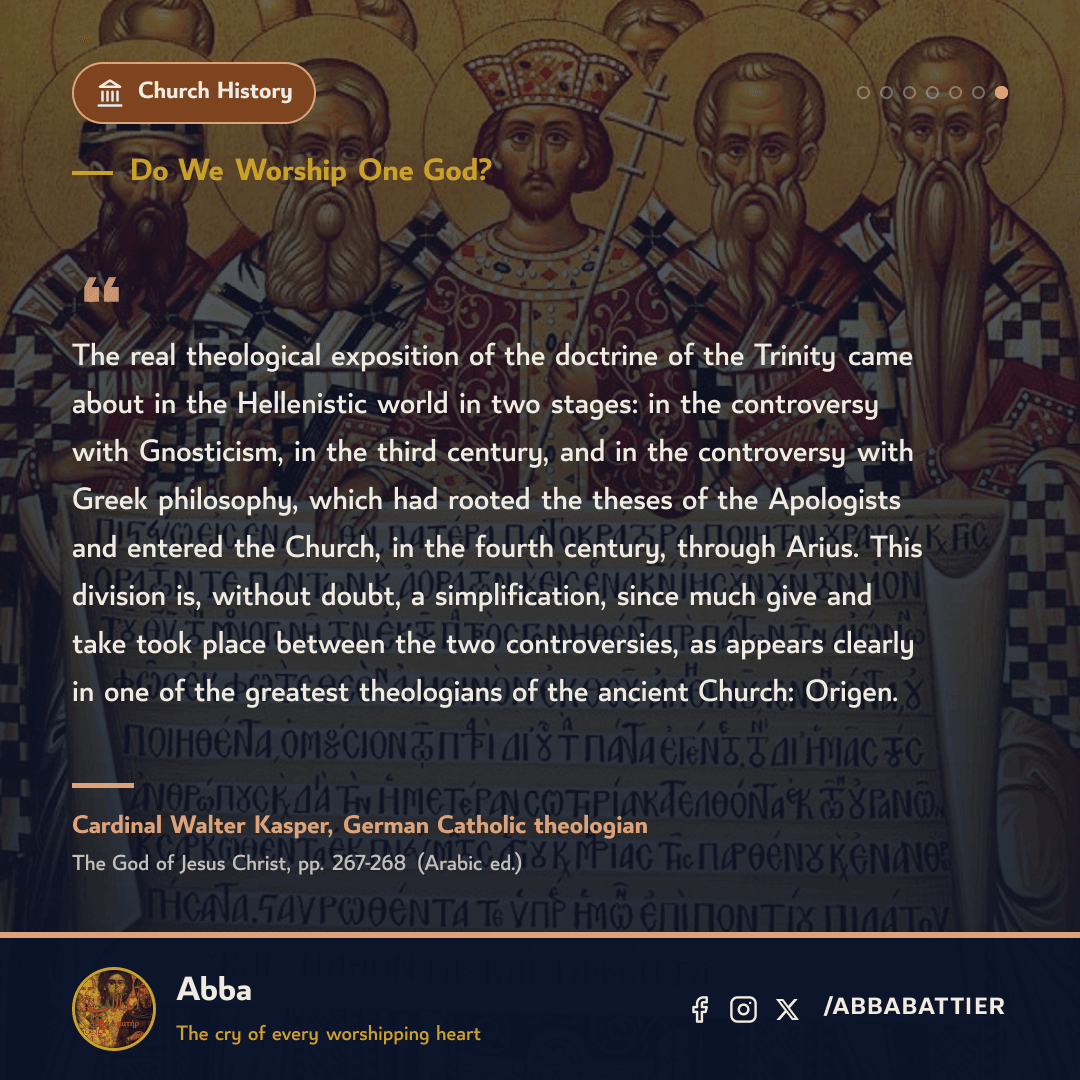
The real theological exposition of the doctrine of the Trinity came about in the Hellenistic world in two stages: in the controversy with Gnosticism, in the third century, and in the controversy with Greek philosophy, which had rooted the theses of the Apologists and entered the Church, in the fourth century, through Arius. This division is, without doubt, a simplification, since much give and take took place between the two controversies, as appears clearly in one of the greatest theologians of the ancient Church: Origen.
— Cardinal Walter Kasper, German Catholic theologian, The God of Jesus Christ, pp. 267-268 (Arabic ed.)