 Abba Ho Pater
Articles
#هل نتناول الناسوت
Fady Mondy's articles on هل نتناول الناسوت — 8 posts.
The witnesses
6 of 7 axes witnessed- Holy Scripture1
- Apostolic FathersNo witness yet
- Apologist Fathers2
- Contemporary Writers1
- Liturgy & Hymns2
- Definition1
- Church History1
Holy Scripture
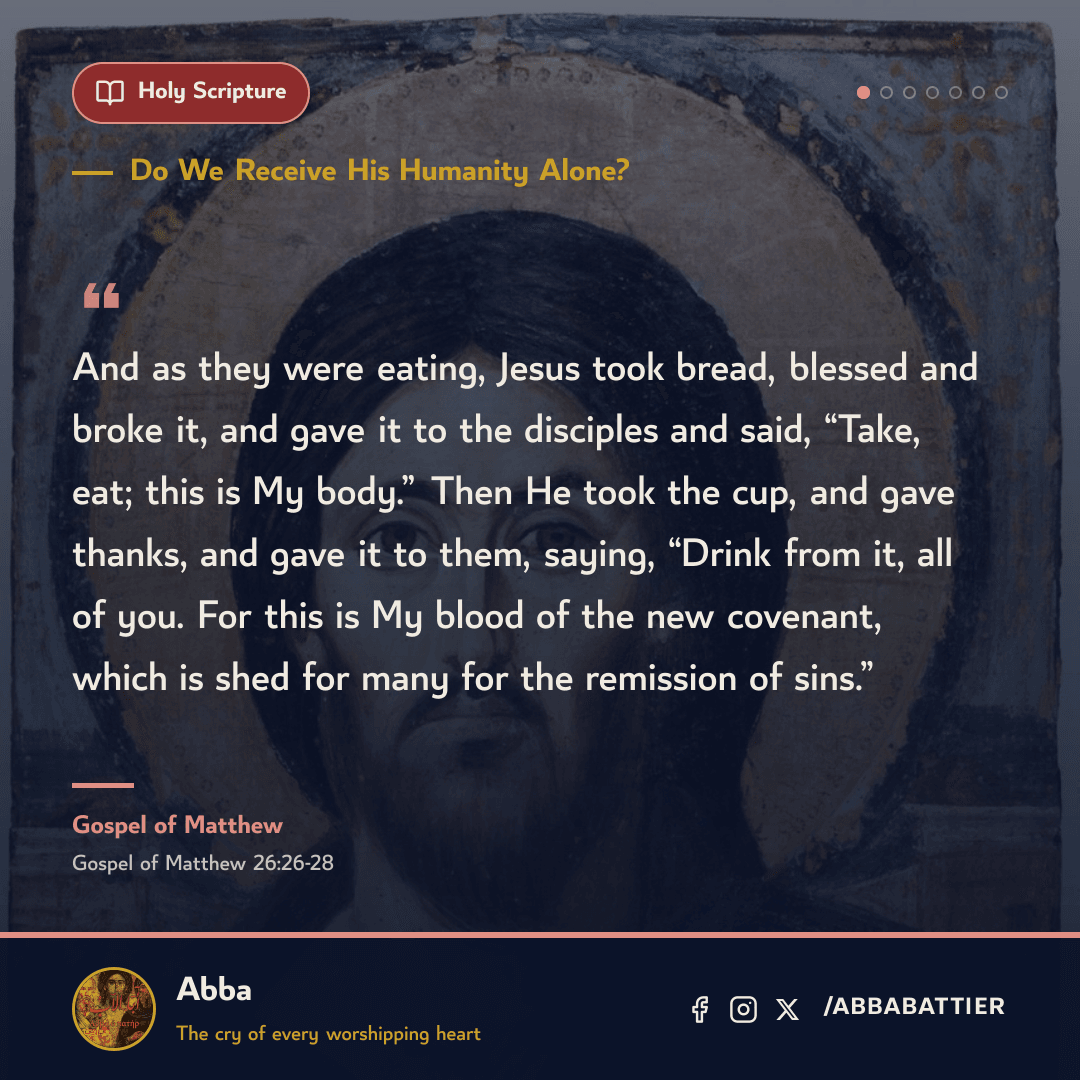
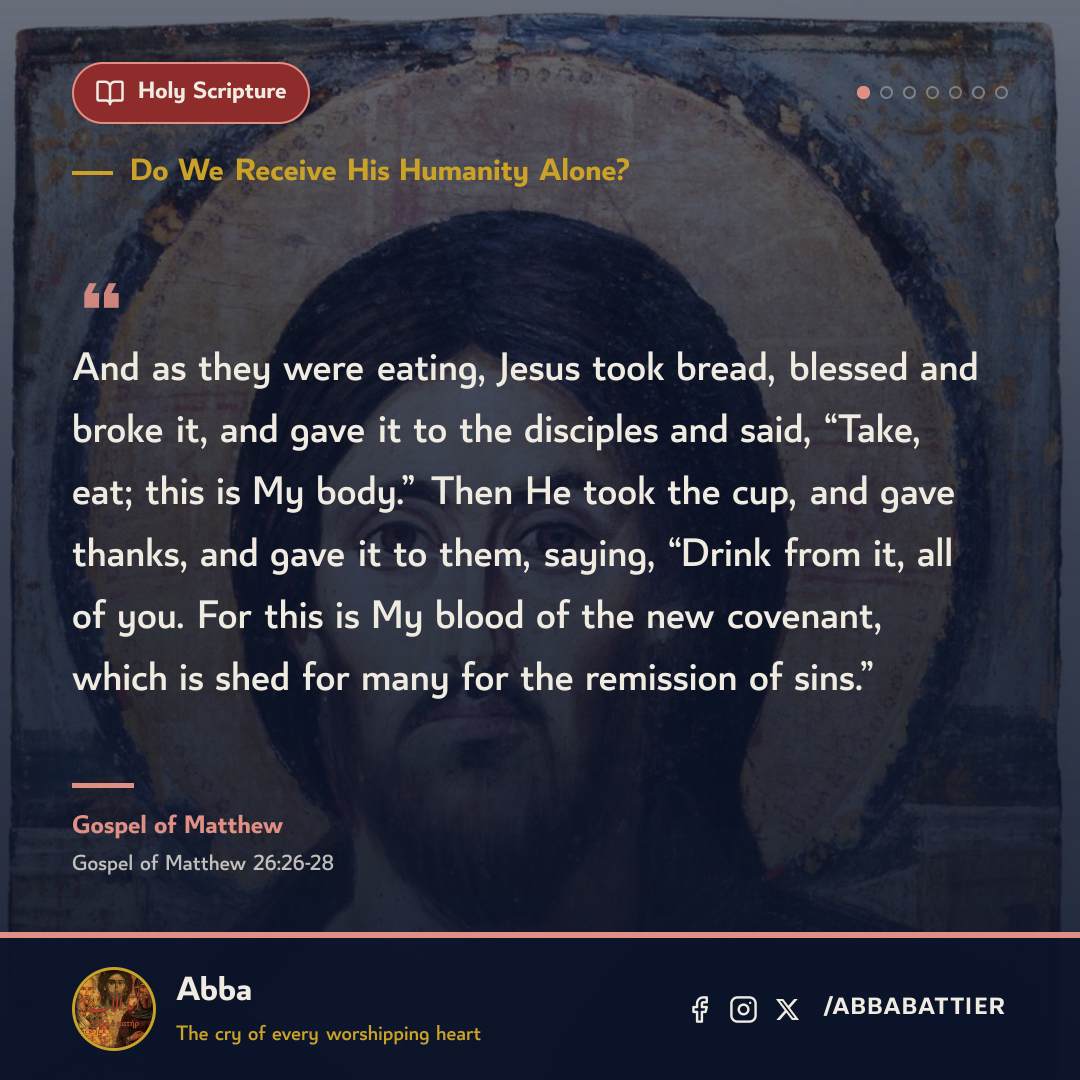
And as they were eating, Jesus took bread, blessed and broke it, and gave it to the disciples and said, “Take, eat; this is My body.” Then He took the cup, and gave thanks, and gave it to them, saying, “Drink from it, all of you. For this is My blood of the new covenant, which is shed for many for the remission of sins.”
— Gospel of Matthew, Gospel of Matthew, 26:26-28
Apologist Fathers
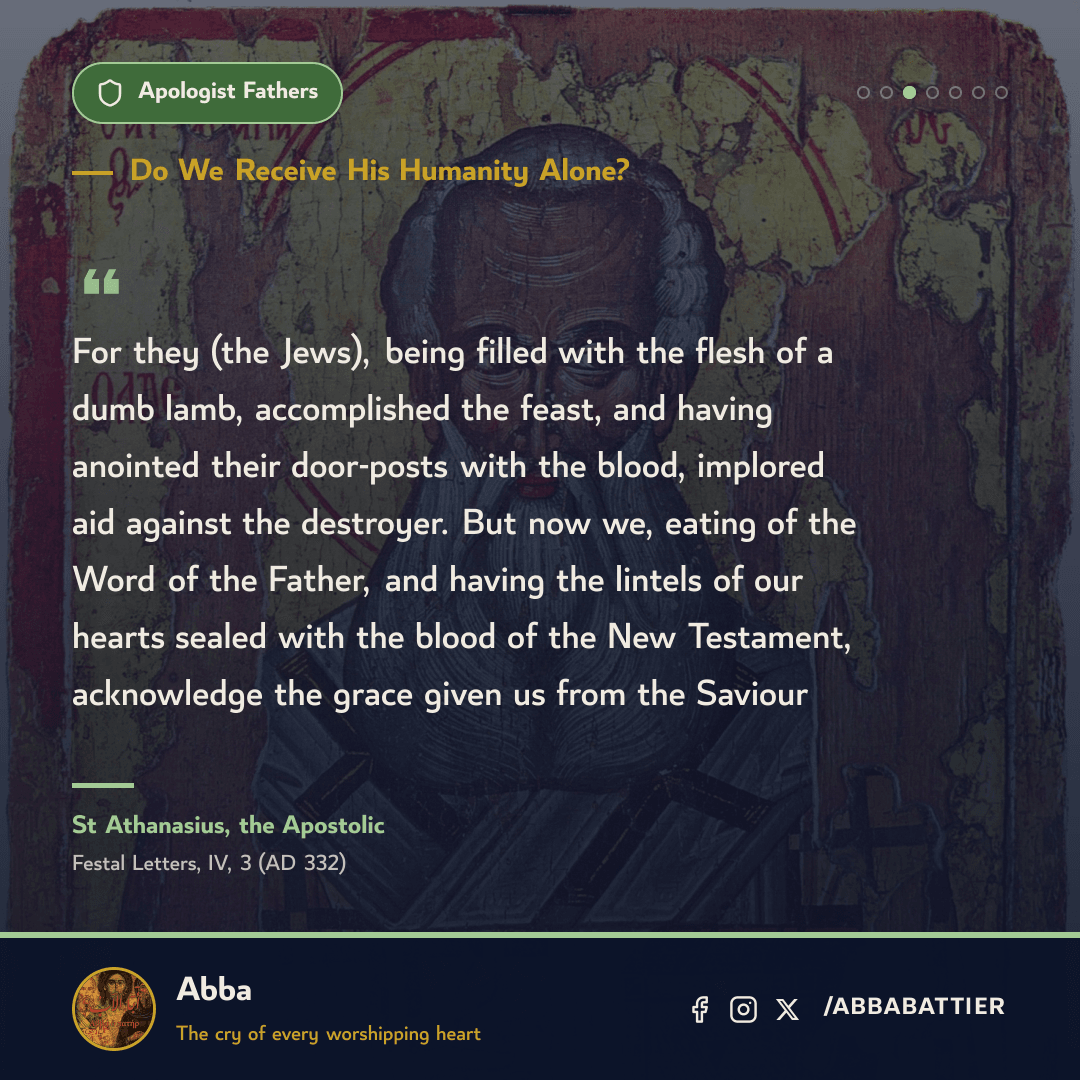
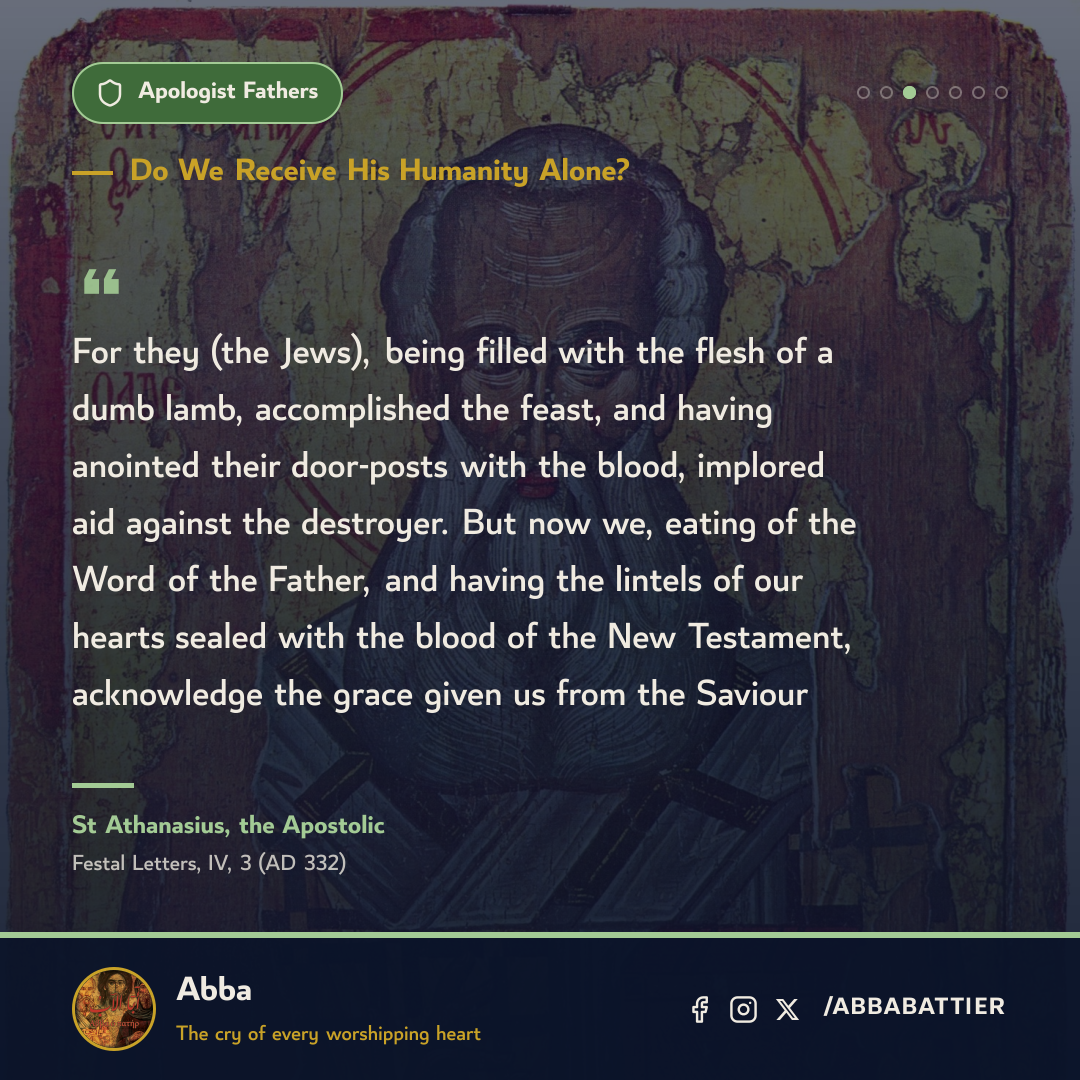
For they (the Jews), being filled with the flesh of a dumb lamb, accomplished the feast, and having anointed their door-posts with the blood, implored aid against the destroyer. But now we, eating of the Word of the Father, and having the lintels of our hearts sealed with the blood of the New Testament, acknowledge the grace given us from the Saviour
— St Athanasius, the Apostolic, Festal Letters, IV, 3 (AD 332) source
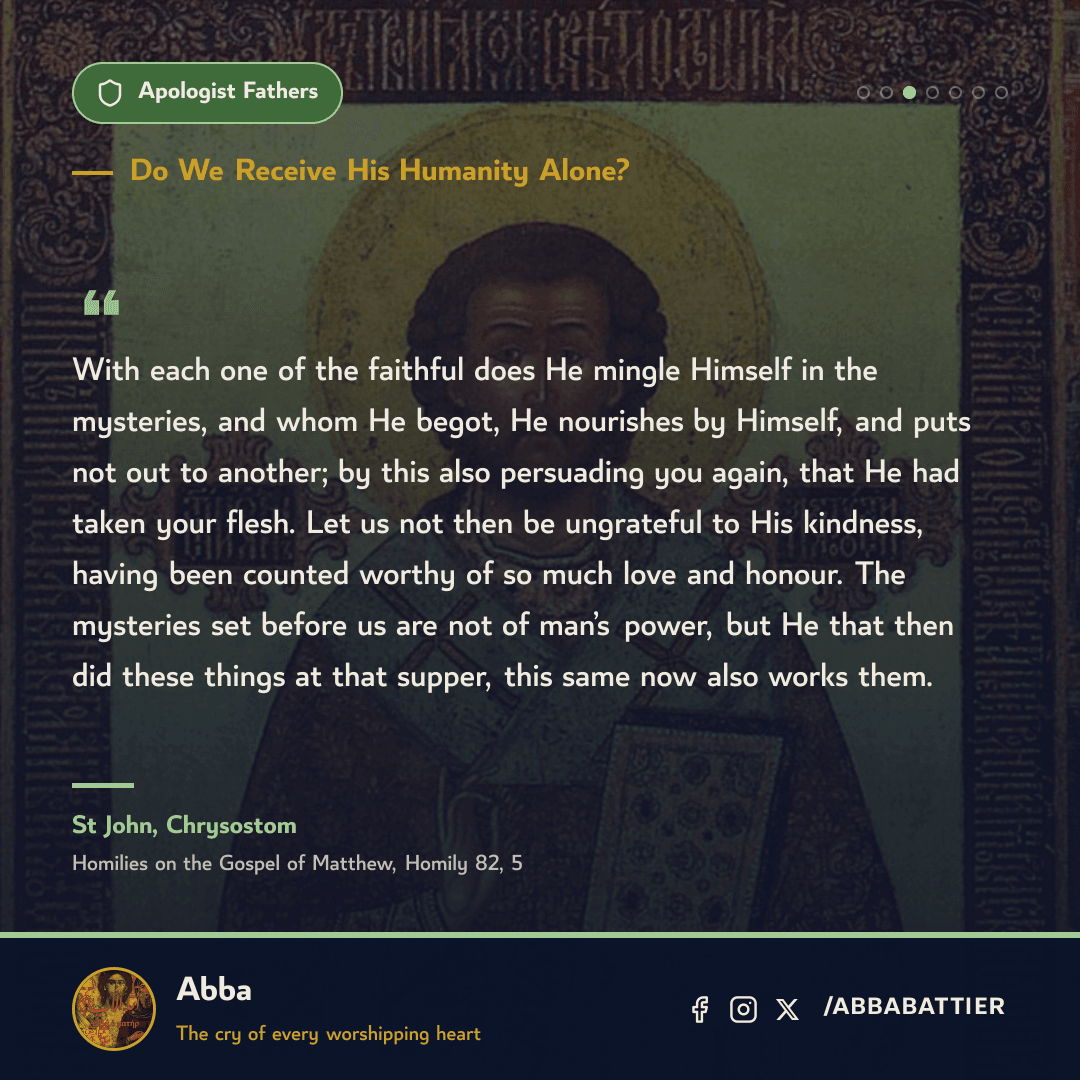
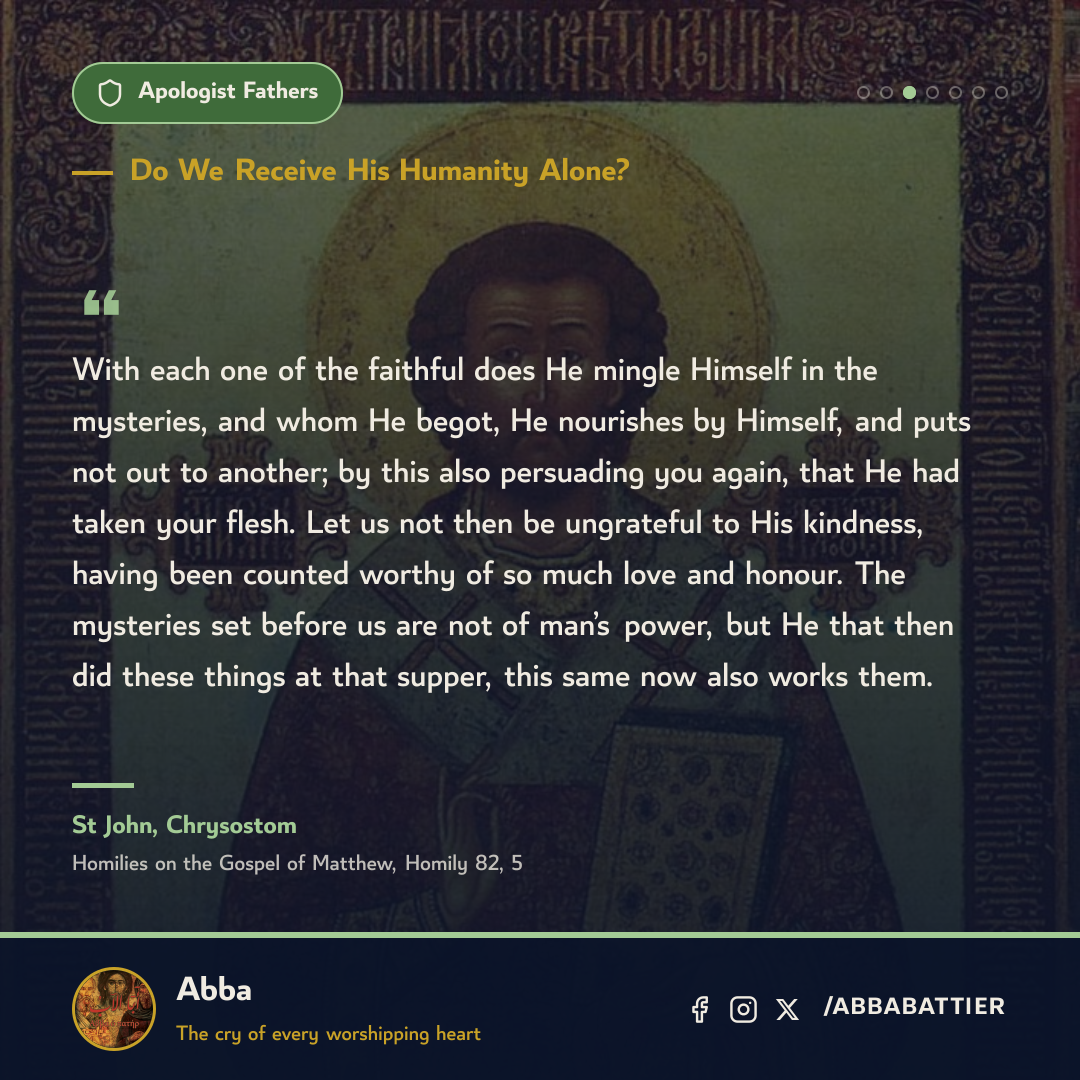
With each one of the faithful does He mingle Himself in the mysteries, and whom He begot, He nourishes by Himself, and puts not out to another; by this also persuading you again, that He had taken your flesh. Let us not then be ungrateful to His kindness, having been counted worthy of so much love and honour. The mysteries set before us are not of man’s power, but He that then did these things at that supper, this same now also works them.
— St John, Chrysostom, Homilies on the Gospel of Matthew, Homily 82, 5 source
Contemporary Writers
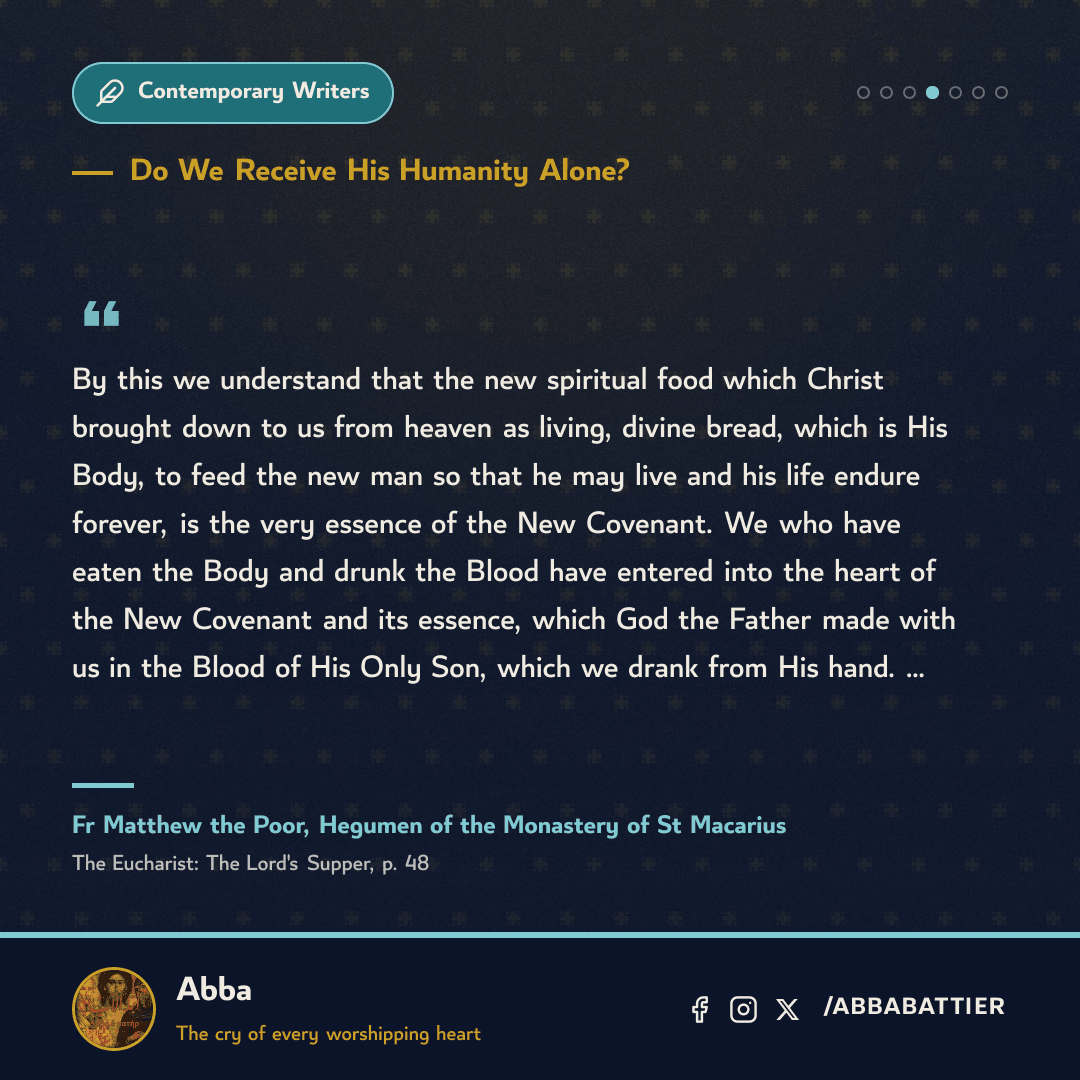
By this we understand that the new spiritual food which Christ brought down to us from heaven as living, divine bread, which is His Body, to feed the new man so that he may live and his life endure forever, is the very essence of the New Covenant. We who have eaten the Body and drunk the Blood have entered into the heart of the New Covenant and its essence, which God the Father made with us in the Blood of His Only Son, which we drank from His hand. …
— Fr Matthew the Poor, Hegumen of the Monastery of St Macarius, The Eucharist: The Lord's Supper, p. 48
Liturgy & Hymns
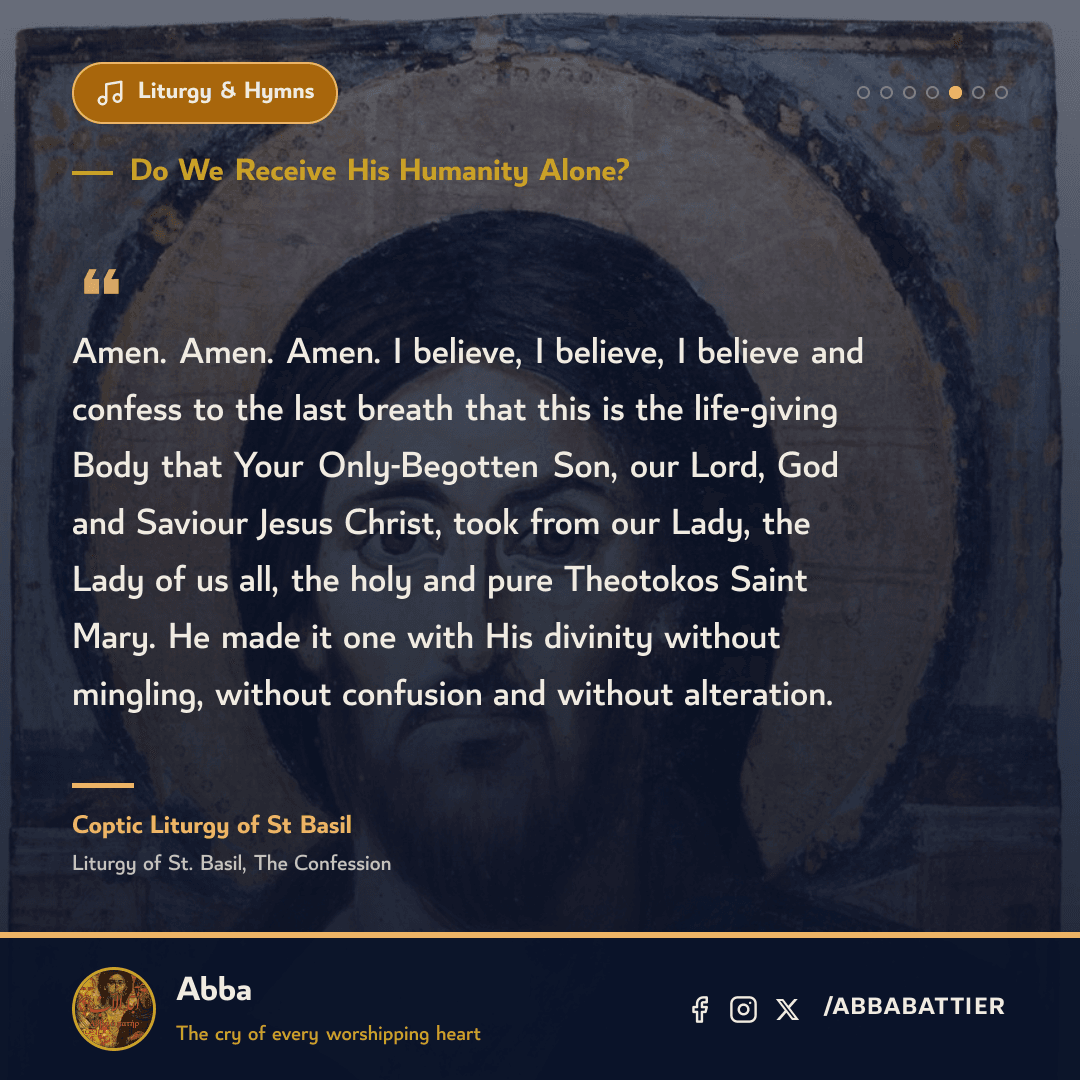
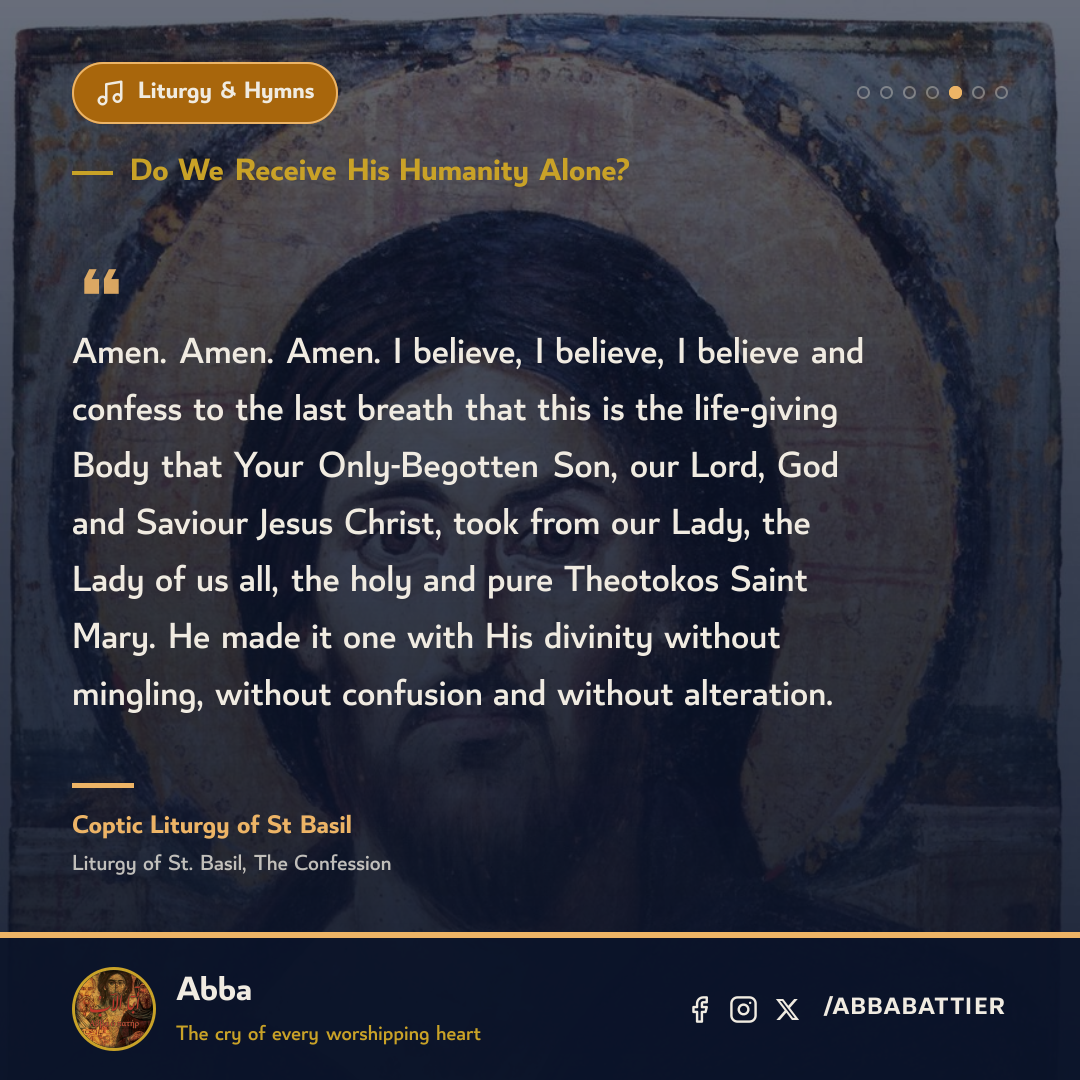
Amen. Amen. Amen. I believe, I believe, I believe and confess to the last breath that this is the life-giving Body that Your Only-Begotten Son, our Lord, God and Saviour Jesus Christ, took from our Lady, the Lady of us all, the holy and pure Theotokos Saint Mary. He made it one with His divinity without mingling, without confusion and without alteration.
— Coptic Liturgy of St Basil, Liturgy of St. Basil, The Confession
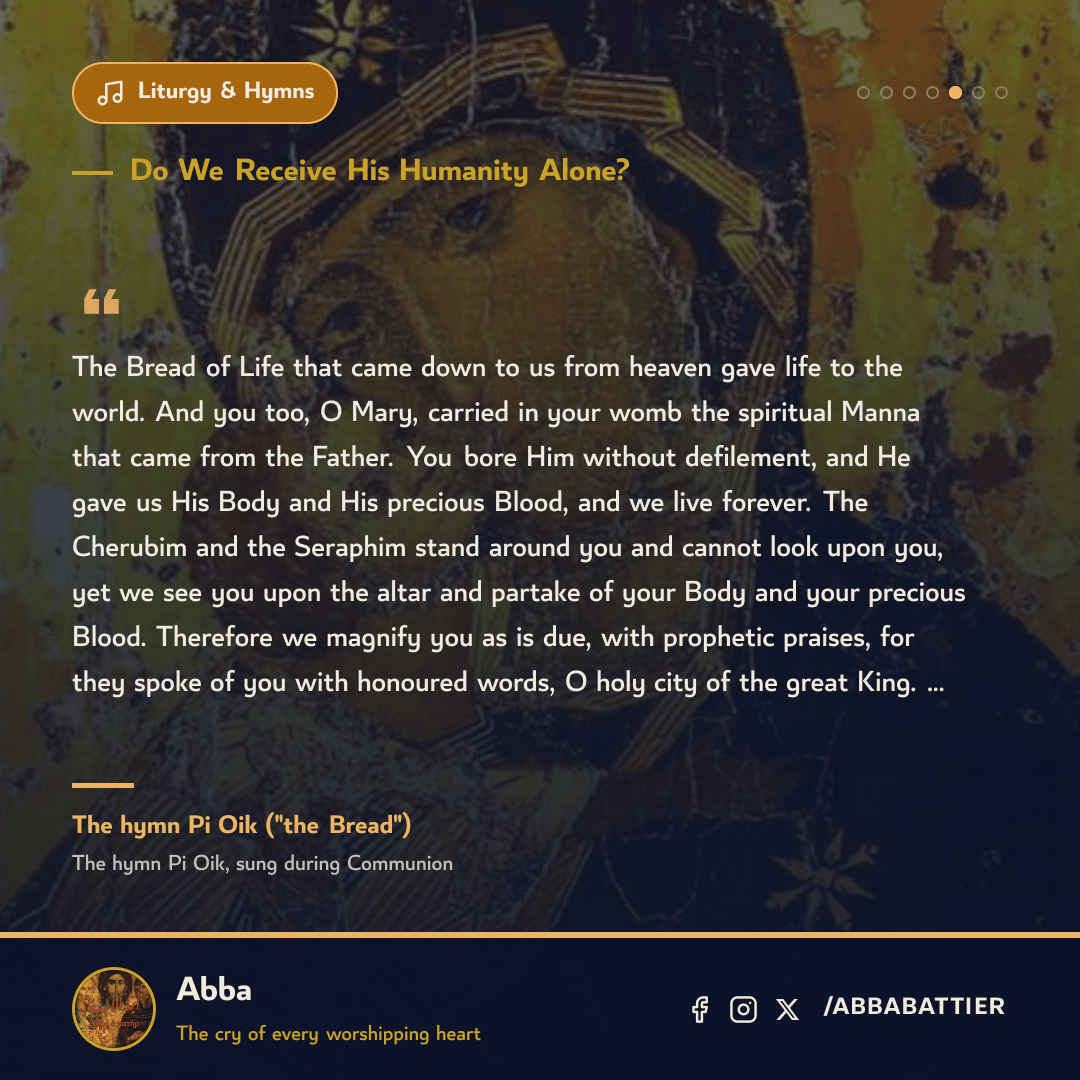
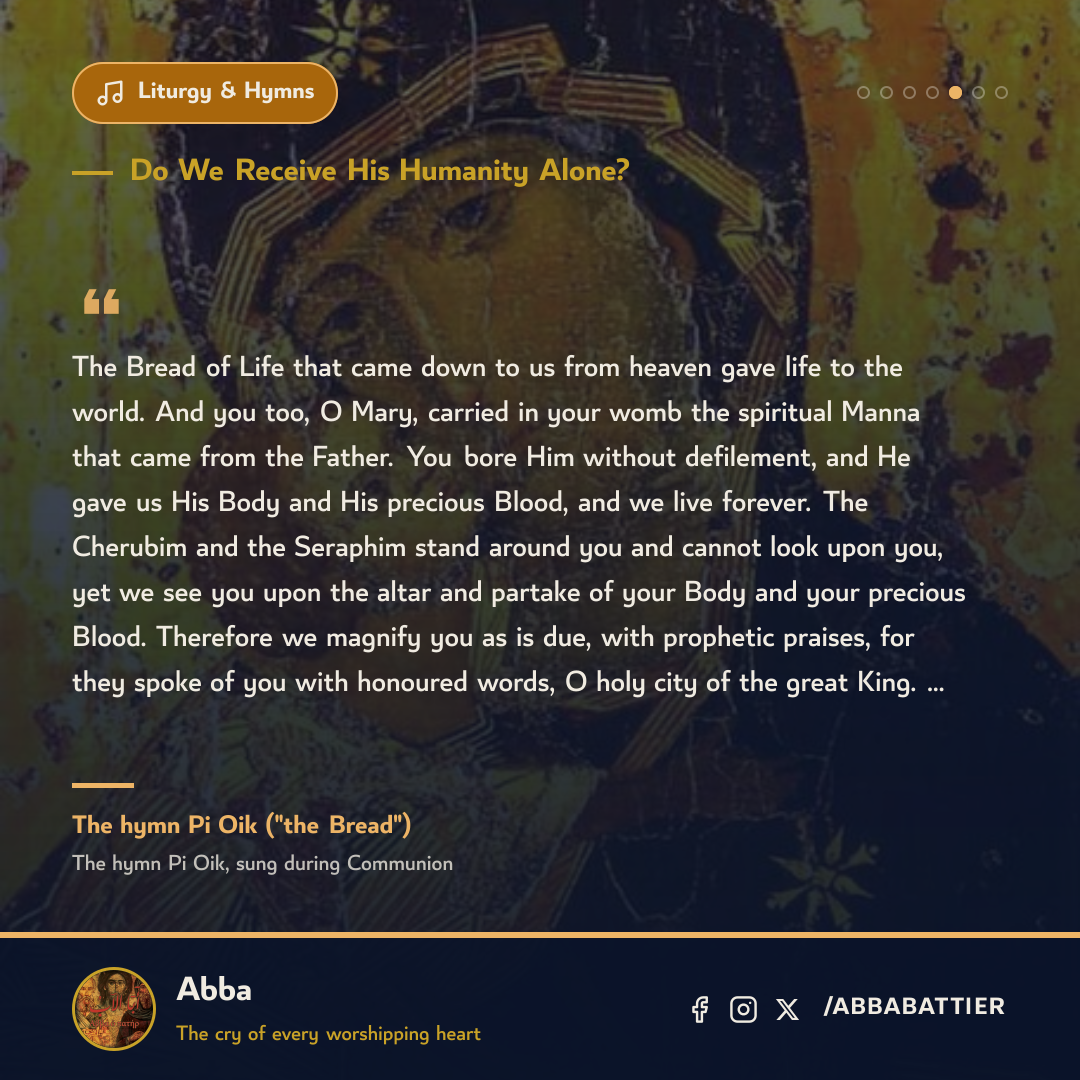
The Bread of Life that came down to us from heaven gave life to the world. And you too, O Mary, carried in your womb the spiritual Manna that came from the Father. You bore Him without defilement, and He gave us His Body and His precious Blood, and we live forever. The Cherubim and the Seraphim stand around you and cannot look upon you, yet we see you upon the altar and partake of your Body and your precious Blood. Therefore we magnify you as is due, with prophetic praises, for they spoke of you with honoured words, O holy city of the great King. …
— The hymn Pi Oik ("the Bread"), The hymn Pi Oik, sung during Communion
Definition
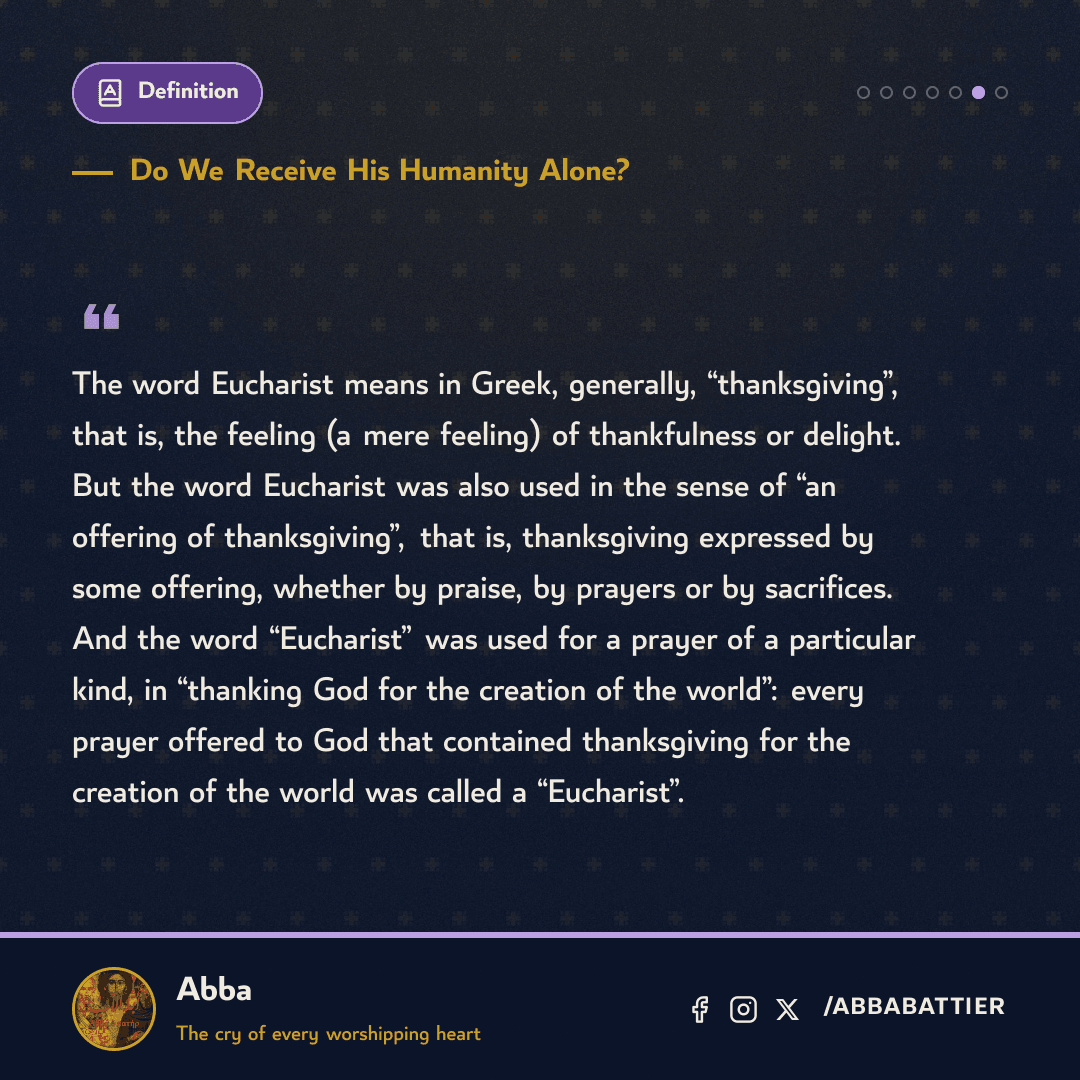
The word Eucharist means in Greek, generally, “thanksgiving”, that is, the feeling (a mere feeling) of thankfulness or delight. But the word Eucharist was also used in the sense of “an offering of thanksgiving”, that is, thanksgiving expressed by some offering, whether by praise, by prayers or by sacrifices. And the word “Eucharist” was used for a prayer of a particular kind, in “thanking God for the creation of the world”: every prayer offered to God that contained thanksgiving for the creation of the world was called a “Eucharist”.
—
Church History
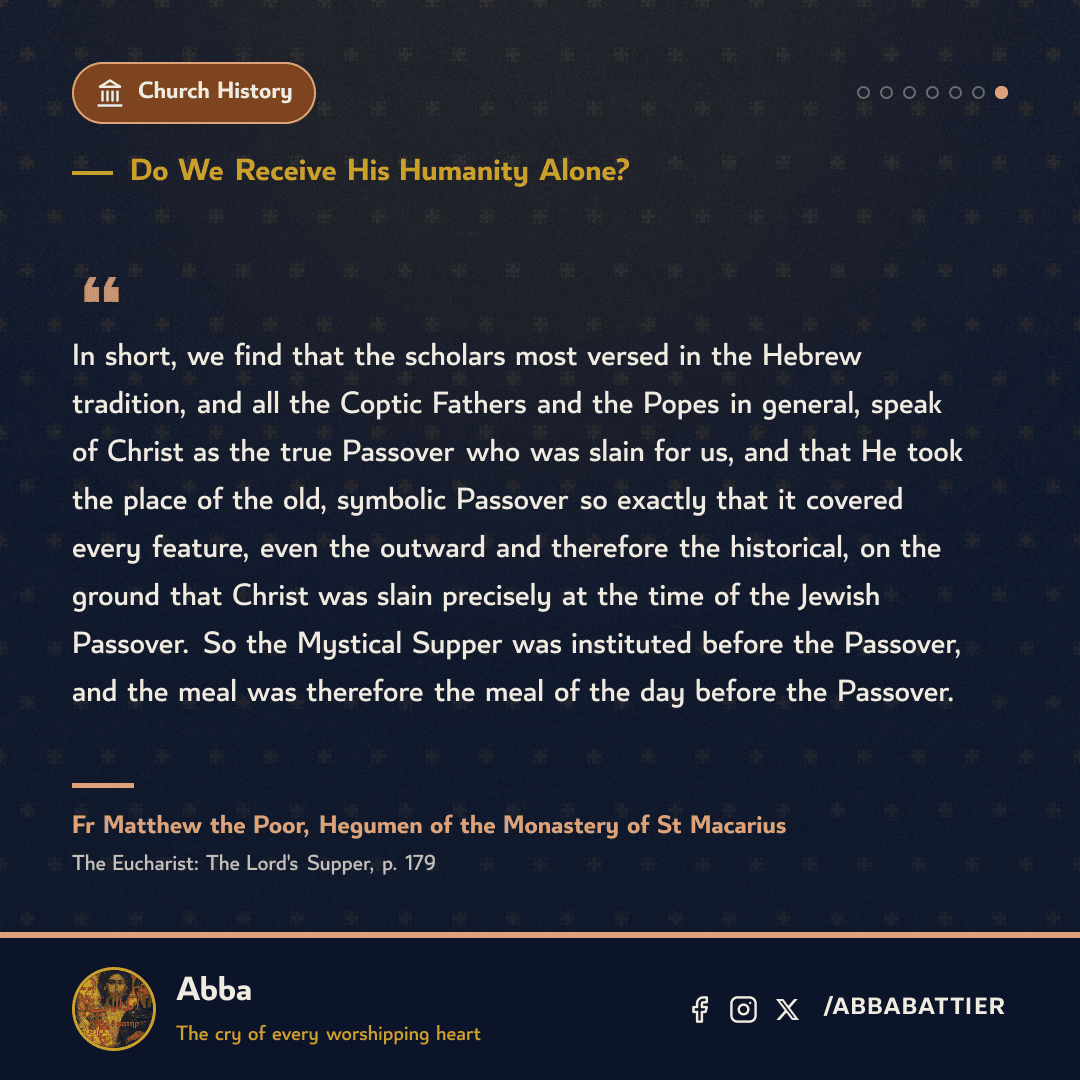
In short, we find that the scholars most versed in the Hebrew tradition, and all the Coptic Fathers and the Popes in general, speak of Christ as the true Passover who was slain for us, and that He took the place of the old, symbolic Passover so exactly that it covered every feature, even the outward and therefore the historical, on the ground that Christ was slain precisely at the time of the Jewish Passover. So the Mystical Supper was instituted before the Passover, and the meal was therefore the meal of the day before the Passover.
— Fr Matthew the Poor, Hegumen of the Monastery of St Macarius, The Eucharist: The Lord's Supper, p. 179
Axes with no witness yet: Apostolic Fathers